
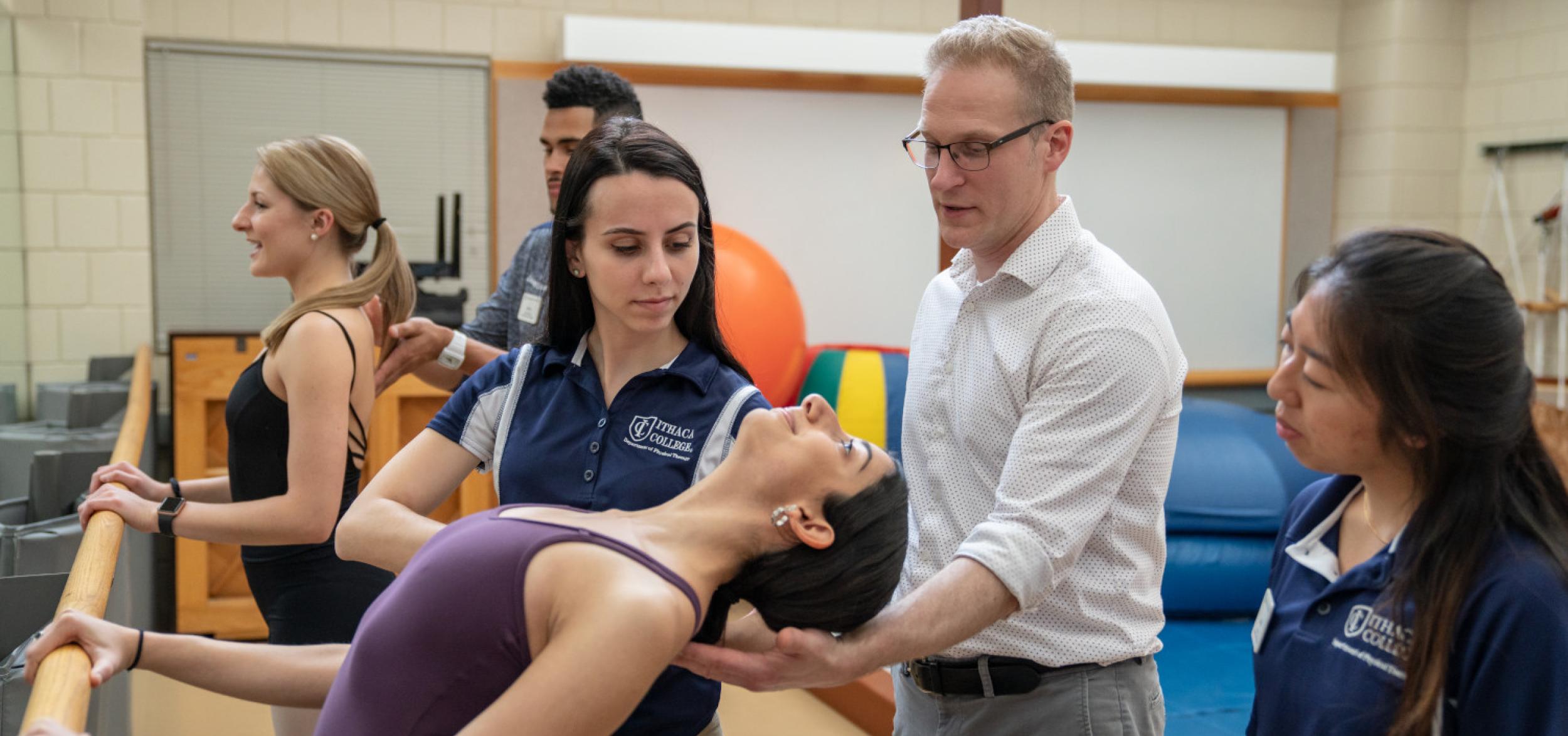

Each graduate program has its own application deadline. Mark your calendar so that you’ll remember when to apply!
Become an Expert and Leader
With a graduate degree from Ithaca College, you can propel your professional success to new heights while you tackle challenging ethical issues, drive innovative research, and create real change that influences lives every day. Here, your passions will yield tangible outcomes and real-world opportunities for you to flourish in your field.
Get Started
With Ithaca College’s rigorous approach to complex ideas and experiential learning, as well as our networking opportunities and high pass rates on professional exams, your industry preparedness and job prospects will grow.
Our Graduate Programs
Earn a graduate degree or professional certificate, or enter an accelerated (bachelor’s-to-professional) health sciences track.
How to Apply
Complete a degree-specific application process that highlights your relevant skills and experience.
Tuition and Financial Aid
Invest in furthering your career through the financial aid and scholarship opportunities unique to your program.
What to Expect as a Graduate Student
We foster curiosity and facilitate opportunity here in beautiful Ithaca, New York. Further your career by participating in experiential learning, networking with IC alumni and industry leaders, and serving communities here and around the world.



460
Graduate Students
Our graduate scholars collaborate as students and network as industry professionals.
99%
Pass Rate
Based on an average of all graduates sitting for the Educating All Students, National Physical Therapy, National Board for Certification in Occupational Therapy, and Praxis exams.
#1
Best College Town
According to a 2019 study by Livability.com, Ithaca, New York, is a top nature destination with an eclectic downtown that hosts annual festivals and thriving art, music, food, and theatre scenes.
Graduate Admission Application Deadlines
Contact the Admission Office
Monday–Friday 8:30 a.m.–5:00 p.m. ET