12 Basic Principles for Incorporating Media Literacy and Critical Thinking
into Any Curriculum
Printable booklet
By Cyndy Scheibe and Faith Rogow
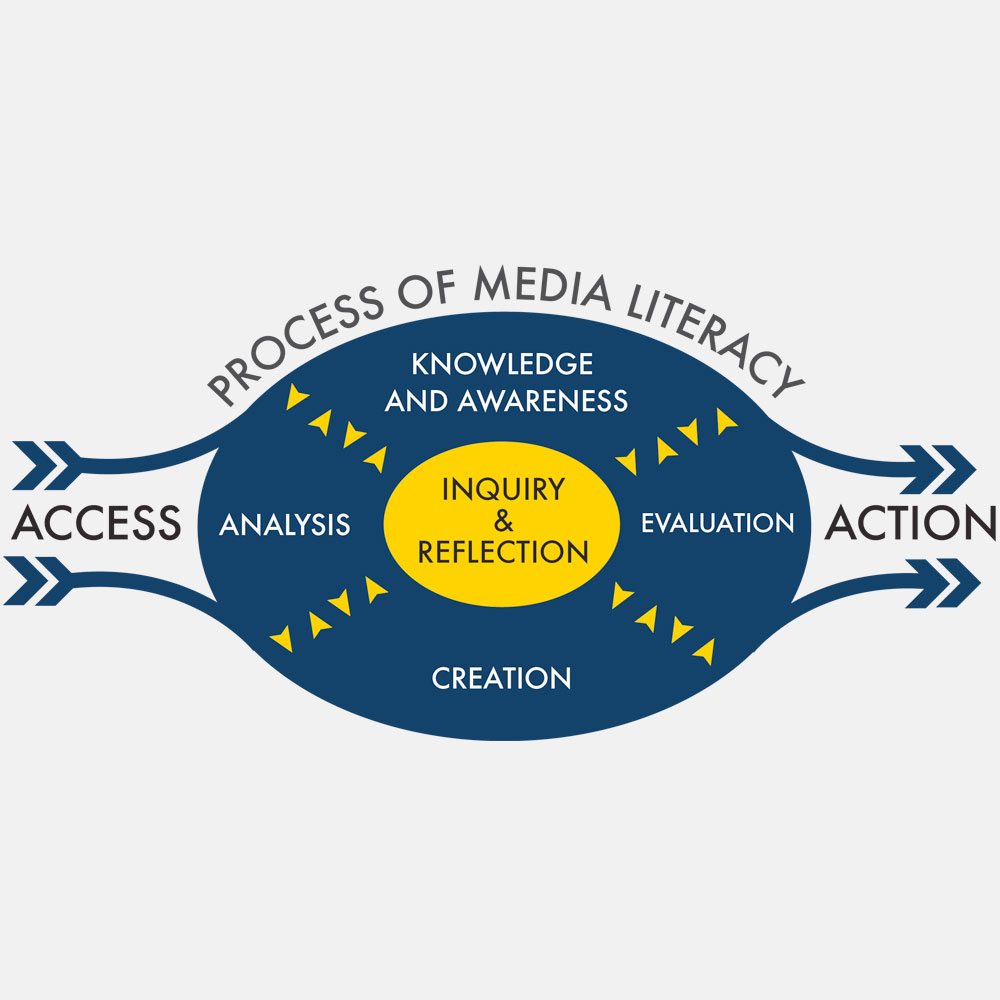
Media litearcay is the ability to access, analyze, critically evaluate, and
produce communication in a variety of forms. At Project Look Sharp we define
"media" very broadly to incllude books, newspapers, magazines, radio
television, movies, videos, billboards, recorded music, video games, and the
Internet.
Media literacy education began in the 1970s with an emphasis on protection
(from the so-called "evil effects" of media) and discrimination (between
so-called "good" and "bad" media content); most media literacy
materials and initiatives were aimed at parents. Since then, there has been
a shift toward an emphasis on media literacy as empowerment (stressing critical
thinking and production skills); more materials are now aimed at schools and
teachers. The empowerment model emphasizes the political, social, and economic
implications of media messages and stresses the importance of using media effectively
and wisely.
This information is designed for teachers and support staff at all grade levels
who are interested in using media literacy in their classroom curricula. The
principles are based on teh concept of weaving media literacy training into
the curriculum whenever and wherever possible throughout the school year. We
feel that this approach is much more effective than simply treating media literacy
as a special, isolated topic and may better meet the needs of teachers who are
already overwhelmed with teh demands of a full curriculum.
The following 12 principles are general guidelines for thinking about ways
to integrate media literacy into any curricular area. For each principle, media
literacy can be incorporated through the use and analysis of existing media
content (as illustration material, material to critique, etc.) and/or through
media production (creating new messages using print, audio, video or digital
media). The activities listed for each principle are meant as examples only.
Following the same general ideas, you may think of additional activities that
meet the needs of your class or curricular area. We encourage you to share your
ideas and experiences with us as you build media literacy into your classroom
curriculum.
- Use media to practice general observation, critical thinking, analysis,
perspective-taking, and production skills by encouraging students to think
critically about information presented in any media message (including the
information from their textbooks or the popular media they use at home) pointing
out ways in which media messages might be interpreted differently by people
from different backgrounds or groups fostering observation and general memory
skills by asking students to look for specific things when they view videos
or read print material, and then asking them about those things afterwards
allowing students to go beyond the curricular issue at hand to identify and
comment on incidental aspects of a media message (e.g., the characteristics
of the people presenting the material, the techniques used to attract attention,
and the ways in which advertising and product messages intrude into other
types of media content) fostering creative skills through encouraging the
production of media messages about a topic.
- Use media to stimulate interest in a new topic by showing an exciting or
familiar video clip or reading a short book or story (fiction or nonfiction)
about the topic having students work in small groups to read, analyze, and
discuss a controversial magazine, newspaper, or online article about the topic
using a short video, magazine illustration, or brief article to stimulate
discussion, encouraging students to express what they already know or their
opinion about a topic showing students how to search for information about
the topic on the Internet encouraging students to plan and design a media
product (montage of pictures, a video, a newspaper or magazine report) about
the topic for other students to view.
- Identify ways in which students may be already familiar with a topic through
media by giving examples from popular media content to illustrate what students
might already know about a topic or things they might be familiar with that
relate to the topic drawing links between the way a topic is typically treated
academically and how it might be used in popular media (e.g., written poetry
vs. song lyrics or advertising jingles) clarifying the way specific terminology
related to the topic might be used differently in an academic sense than it
might be in the popular culture building on the intuitive knowledge students
have gained from media about the content area (e.g., about story and character
development, problem solving, terminology, rhyming).
- Use media as a standard pedagogical tool by providing information about
the topic through a variety of different media sources (books, newspaper/magazine
articles, instructional videos, websites), comparing the usefulness of different
media, and addressing conflicting information that may come from different
sources using media to convey information more richly and effectively than
would be possible with a standard classroom discussion or demonstration encouraging
students to follow (and write about) current events reported in the media
about a topic using media content as assigned homework (reading material,
searching for information about a topic in newspapers or magazines, etc.)
encouraging students to share information in class that they have gotten from
various media sources (inside or outside of class).
- Identify erroneous beliefs about a topic fostered by media content by analyzing
media content that misrepresents a topic or presents false or misleading information
about a topic identifying misleading ways in which data are presented in the
media (citing statistics incorrectly, drawing false conclusions from data,
presenting unclear figures and tables, etc.) identifying false beliefs held
by students about a topic that may have come from fictional media content
encouraging students to create their own false or misleading media messages
(PSAs, commercials, digitally manipulated print advertisements, etc.) and
then having them present the message and "debunk" it for the other
students in the class.
- Develop an awareness of issues of credibility and bias in the media by teaching
how to recognize the source (speaker) of a media message and the purpose of
producing the message, and how that might influence the objective nature of
information clarifying the distinction between fiction and nonfiction in different
types of media reporting on a specific topic identifying ways to decide what
are credible sources about this topic within different types of media (e.g.,
books, magazines/journals, the Internet) emphasizing the importance of getting
information from many different sources and how to give weight to different
pieces of information (e.g., if the information is based on research or other
evidence vs. personal opinion) producing media messages about this topic,
emphasizing ways in which bias can be introduced through the words and tone
used to present the topic, sources of information used, what is selected to
be presented and what is left out, etc. exploring how media messages reflect
the identity of the creator or presenter of the message, and how the same
message might come across differently if it were presented or created by someone
of a different background, age, race, gender, etc.
- Compare the ways different media present information about a topic by contrasting
ways in which information about a topic might be presented in a documentary,
a TV news report, a newspaper article, an advertisement, or an educational
children's program about a specific topic (what is emphasized, what is left
out, what techniques are used to present the information, etc.) comparing
the amount of time/space devoted to a topic in different media from the same
time period (and discussing why the difference occurs) analyzing different
conclusions that might be drawn by people exposed to information presented
in one medium vs. another discussing the strengths of different media to best
get across a particular message producing reports about the topic using different
forms of media, or manipulating the same information and visuals to convey
different messages.
- Analyze the effect that specific media have had on a particular issue or
topic historically and/or across different cultures by discussing the role
that the media have played (if any) in the history of this topic (i.e., ways
in which the media have changed the nature of this issue or topic) discussing
how people of earlier generations might have learned about this topic, what
sources of information were available to them compared to sources available
to us now, and what difference that would make in people's lives exploring
the level of knowledge about a topic in different cultures and how that knowledge
is influenced by the media available identifying media forms that are dominant
or available in other cultures that may be seldom used in the United States,
and vice versa.
- Use media to build and practice specific curricular skills by using print
media (books, newspapers, magazines) to practice reading and comprehension
skills substituting excerpts from existing media content for standard story
problems or practice examples (e.g., to practice math skills, to correct grammar
or spelling, to identify adjectives or adverbs) using media production to
practice specific skills (e.g., grammar, poetry, math used in timing and proportions
of media messages, scientific principles involved in calculating size, distance,
and lighting) preparing examples for practicing skills that include media
literacy information (e.g., comparing the lengths of news stories about different
topics, computing the Nielsen ratings for different shows, analyzing the ways
in which two products are described in advertisements) fostering computer
skills by encouraging students to search for information on the Internet,
develop multimedia projects, and use computers to present information about
a topic.
- Use media to express students' opinions and illustrate their understanding
of the world by encouraging students to analyze media messages for distortions
and bias issues of particular interest to them (e.g., messages about sex and
gender, messages promoting harmful behaviors, race and age distortions in
the "media world" compared to the real world, and advertising targeted
to people their age) encouraging students to express their feelings and knowledge
through media messages that they produce encouraging thoughtful critiques
of various media productions promoting discussion of different points of view
about popular media articles and productions.
- Use media as an assessment tool by having students summarize their knowledge
about a topic in a final report that employs other forms of media beyond the
standard written report (e.g., computer- illustrated reports, audio or video
productions, photographic illustrations) encouraging students to work in groups
to illustrate their understanding of a topic by creating mock media productions
(e.g., newspapers, advertisements, news reports, live or videotaped skits)
presenting, at the end of a unit, a media message (e.g., from a newspaper,
magazine, or video) that contains false information about the topic and seeing
if students can identify what is correct and what is incorrect in the message.
- Use media to connect students to the community and work toward positive
change by finding collaborative possibilities for projects with community
institutions (museums, libraries, galleries) that may involve students analyzing
or creating media messages having students contact community service agencies
related to the curricular area and offer their assistance with production
(e.g., photography, video, design and layout, or computer skills) to help
with agency projects encouraging older students to teach production techniques
or media literacy principles to younger students in the same schoolusing media
forums (e.g., local community access TV, newspapers, and magazines) to communicate
messages or share research projects about the topic.
|