
Saturday, 3:20 PM–4:50 PM

Revisiting Established Harmonic and Formal Models

Chair: Robert Wason (Eastman School of Music)

  • Some 18th-Century Ritornello Scripts and Their 19th-Century Revivals
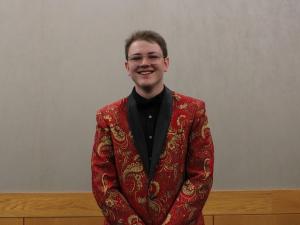
    Joel Galand (Florida International University)
  • The Major Dominant in Minor-Mode Sonatas: Brahms's Fourth Symphony and Its Predecessors
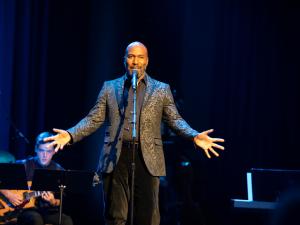
    Boyd Pomeroy (Georgia State University)

  • "Some 18th-Century Ritornello Scripts and Their 19th-Century Revivals"
        Theorists at least as far back as Tovey have noted certain movements by Schubert and Brahms that seem anomalous, both with respect to the rest of their works and to our general understanding of the formal conventions of the classical Viennese instrumental music that constituted their horizon of expectations. It is my contention that these pieces are considered sui generis only because they have not been analyzed in light of more flexible eighteenth-century techniques for combining ritornello and binary procedures, whether in rondos, in concerto forms, or in concertante chamber music. This paper uses Schenkerian analysis together with concepts drawn from historical theory to reveal structural similarities between certain ritornello forms by Haydn, Mozart, and Vanhal on the one hand, and Schubert and Brahms on the other. In doing so it also expands upon previous research, notably James Webster's, that traces formal affinities between the latter two composers. Schubert's most striking formal innovations often arise from combining somewhat archaic mid-eighteenth-century formal procedures with his penchant for chromaticism and for quasi-novelistic digressions (Einschaltungen, to use the formal vocabulary of the time). Brahms adopted ritornello principles as a formal determinant in sonata-style movements early in his career. Perhaps not coincidentally, the Serenades opp. 11 and 16, both deliberately classicizing works, contain movements that, in their amalgamation of rounded-binary, rondo, and concerto procedures, exhibit a refreshing formal variability akin the that of early Classicism (I use that term merely as a chronological marker). The paper draws comparisons between specific pieces (e.g., the finale of Mozart's Sonata in C Minor, K. 457, and the first movement of Brahms's Trio, op. 101) not for the purpose of claiming an empirically verifiable instance of influence but rather to demonstrate strikingly similar fusions of ritornello and sonata principles. On a more general level, this paper is intended as a contribution to Schenkerian studies, specifically towards the application of the theory not only to the analysis of individual pieces but also to broader considerations of rhythm, style, form, and genre, concerns shared by such scholars as Jackson, Rothstein, Schmalfeldt, Charles Smith, and Peter Smith.

    “The Major Dominant in Minor-Mode Sonatas:Brahms’s Fourth Symphony and Its Predecessors”
    The paper investigates an intriguing category of minor-mode sonata form: movements that tonicize the dominant in its major mode, thus proving exceptions to the generalization concerning the difference, in the minor system, between V as chord (major, with its strong resolution tendency) and as key (minor, without that destabilizing leading tone). As a key relation, such modal mismatching of minor tonic with major dominant tends to impose an artificial strain on the very nature of the minor system; for this reason it was rigorously avoided in the Classical period. It emerged as a viable alternative only in the post-Classical sonata, in which (chromatic/aesthetic) context its very problematic nature might be turned to expressive advantage. I will explore a variety of ways in which the tensions arising from the major dominant’s inherent instability—expressed as a leading-tone pull towards the tonic—can affect the sonata’s tonal course and middleground voice-leading basis, in extreme cases fundamentally transforming the form’s very nature. Discussion of several examples from Schubert to Brahms will show how this exposition type gives rise to a range of associated tonal-formal and voice-leading categories, including the “three-part Ursatz,” “failed exposition,” “classicizing” modal correction within the dominant-centered S, “premature” tonic return/false exposition repeat, and (in extremis) the fully-fledged “ternary sonata” (after Jack Adrian) with structural tonic return at the start of the development—the latter represented by the first movement of Brahms’s Fourth Symphony, famously characterized by Ernst Oster as a “borderline case of sonata form.” The paper concludes with a more detailed analysis of this movement, where (in this and other ways) the tonicized major dominant finds its furthest-reaching structural consequences.


    TOP

    Program