
Saturday, 9:00–10:30 am

Semiotics and the Simpsons: D'oh re mi

Chair: Taylor Greer (Penn State University)

  • Music and Cultural Values in the Theory of Narrative Archetypes
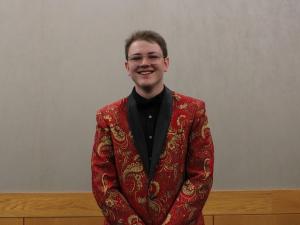
     Michael Klein (Temple University)
  • Trope and Irony in "The Simpsons" Overture
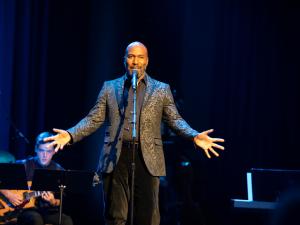
     Martin Kutnowski (Saint Thomas University)
  • Program

    Music and Cultural Values in the Theory of Narrative Archetypes

    In a recent article on narrative archetypes, Bryon Almén borrows James Liszka’s semiotic theory of myth and applies it to the study of music. Although Almén’s article holds much promise for the analysis of musical narrative, it focuses primarily on Liszka’s method of structuring myth while largely ignoring a greater concern to show how myths are involved with cultural values. This paper seeks to critique and expand Almén’s theory to demonstrate how a richer engagement with Liszka’s work can help us understand how narratives confront both musical and cultural values. The paper is in three parts. Part one briefly summarizes Liszka’s theory and Almén’s borrowing of it for music analysis. Liszka argues for four narrative archetypes structured by the double opposition victory/defeat, and order/transgression: romance, comedy, tragedy, and irony. Almén’s extension of this theory asks listeners to track musical oppositions in a work, while sympathizing with one pole of that opposition. The success or failure of that pole determines the narrative archetype in play. Part two discusses the theory of transvaluation (valuing or revaluating cultural oppositions) in Liszka’s work, which found little expression in Almén’s method of narrative analysis. Following a tradition of narrative study, Liszka argues that narratives place cultural oppositions in a crisis whose resolution establishes, denies, or confirms cultural values. Part three offers narrative analyses of two works, Chopin’s Second Ballade, and the Andante con moto movement of Beethoven’s Fourth Piano Concerto, to illustrate how musical narratives engage in a similar process of transvaluing musical and cultural values.

    Trope and Irony in "The Simpsons" Overture

    If movie music has generally been marginalized with respect to the classical canon of instrumental music, then television music is at the margin of the margin.  But using “The Simpsons” cartoon as my case study, I show that television music can use sophisticated compositional techniques worthy of close analytical study. The initial sequence introduces the physical, behavioral, and psychological profiles of the five family characters plus the suburban American culture that surrounds them in the town of Springfield. Lasting only one minute and seventeen seconds, the soundtrack accompanying the initial sequence is a luscious symphonic overture that can be alternatively perceived as original music, source music, or a series of sound effects, all seamlessly cued to the fast-paced visuals. Inscribed within Hollywood’s cinematographic language, the music is a powerful generic marker; several visual-musical conventions evoke comedic tropes while also addressing the specificity of the show. Music, image, and narrative are all logically threaded, but sometimes narrative, musical, and visual tropes interact in ways projecting absurdity and irony. Aside from the pantomimic or comedic effect, these contradictions address the dysfunctional life of the Simpsons, and paint an updated version of the American Dream that offers an alternative to decades of television shows portraying suburban family life as something neat and stable. The self-critical meanings of “The Simpsons,” as they are expressed in the initial sequence, may be construed as reactions to or refinements of earlier statements about American family and societal life from the 1950s, 1960s, and 1970s.

    Top

    Program