
Sunday, 9:30–11:00 a.m.
Room 2105 (Iger)

Teaching Musical Style     

Chair: Timothy Johnson (Ithaca College School of Music)

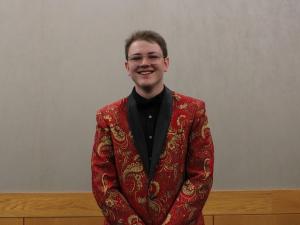
  • Teaching Classic Era Style Through Keyboard Accompaniment
    Peter Silberman (Ithaca College)
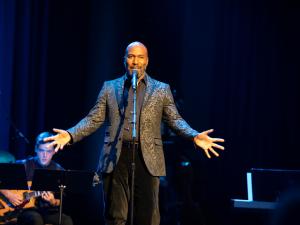
  • The Evolution of a Styles Simulation Course for Graduate Theory Majors
    Robert Gauldin (Eastman School of Music)
  • Program

    Teaching Classic Era Style Through Keyboard Accompaniment

    Stylistic composition often plays a large part in the undergraduate music theory curriculum. Many institutions offer courses in Renaissance or Baroque counterpoint, and many twentieth-century music courses include the composition of free atonal and/or serial works, perhaps in the style of Schoenberg or Webern. However, students are less commonly taught to imitate the repertoire between the Baroque and the twentieth century.

    In particular, there are limited resources available that teach students to write in the Classic era style. While many textbooks include chapters on such Classic era staples as periods, sentences, and sonata form, few offer any substantial comments on stylistic features. What is clearly needed is a step-by-step method that gives students specific guidelines for writing in the Classic style, and which is concise and efficient enough so that students can master that style in reasonable amount of time.

    This presentation works towards this goal by focusing on one aspect of Classic era style, keyboard accompanimental texture. I first survey several popular undergraduate theory textbooks to show that undergraduates are often taught to write keyboard accompaniments that lack the richness and variety of typical Classic era accompaniments. Next, I discuss the literature on Classic era style briefly to discover what Classic era composers actually wrote as accompaniments, and how that differs from most textbooks’ approaches. Then I present my method, based on accompaniments from Mozart’s piano sonatas. The presentation will conclude with samples of successful writing by my students.

    Top

    The Evolution of a Styles Simulation Course for Graduate Theory Majors

    Some fifteen years ago the Theory Department of the Eastman School of Music inaugurated a Masters degree in Music Theory Pedagogy. In designing its curriculum, its faculty felt the need to resurrect a "writing skills" course, in which the students would simulate various historical styles through original compositional projects, an approach that would later prove valuable when pointing out various options to their own students in such assignments as melody harmonization. This paper traces the evolution of that course (entitled "Advanced Harmony and Composition"), as documented by its sole instructor for that period.

    Although the text of the paper will confine itself largely to statements concerning the chronological presentation of materials in this course, it will attempt to evaluate the overall effectiveness of the exercises and projects assigned over the years of its existence, while also discussing some directions which eventually proved to be "blind alleys." An extensive handout will lay out the course syllabus, illustrate many of the preliminary exercises, and provide a list of suplementary "model pieces" which were analyzed. Time permitting, a few short CD selections from some of the students' longer compositional projects (all of which were performed and recorded in class) will be played.

    Top

    Program