Department of Anthropology

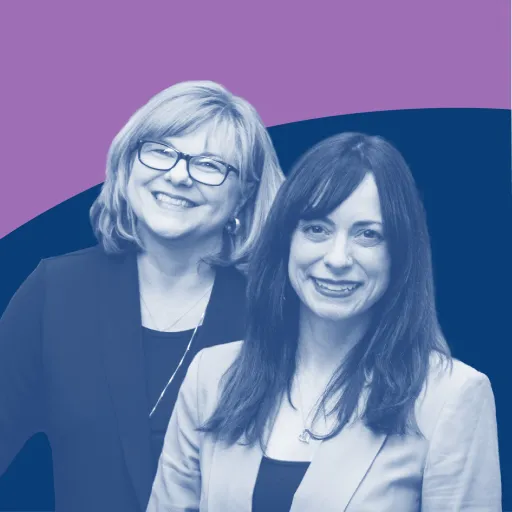
Anthropology professors at 2008 graduation
Anthropology Graduates: Where Are They Now?

Robin Arutt is director of educational programs and services for a small, multicultural/educational publishing company in Philadelphia.

Maria-Claire Cazorla is working for Americorps in Ithaca.

Rachel Corr was awarded a Fulbright grant for field research in Ecuador. She received a Ph.D. in anthropology from the University of Illinois and now teaches at Florida Atlanta University.

Paul Guggenheim is on the staff of the Chicago Field Museum focusing on conservation education with the population living in the buffer zone of a new national park in Peru.

Pam Keef received a master's degree in biology. Pam now teaches high school in Maine and leads field trips to Costa Rica.

An academic adviser to the business school of Florida State University, Janice Lindsley is working on a Ph.D. in the humanities program there.

Laura Moran, after having her departmental honors paper published, was accepted by the graduate program in anthropology at Oxford University.

Jessica Ranciato works as a policy analyst in the Massachusetts legislature.

Rich Steinberg is a staff member at the Children's Museum in New York City.

Ken Voorhees completed a master's degree in social work and is now employed at a mental health clinic in Omaha, Nebraska.

After interning in a Milwaukee museum as an undergraduate, Jennifer Wiggins is pursuing a graduate degree in anthropology and museum studies at the University of Nebraska.

Brett Heindl is visiting assistant professor of development studies at Brown University's Watson Institute for International Studies.

After a stint in the Peace Corps teaching mathematics and computer studies in Tanzania, Joe Holler  (2003) has entered the graduate program in geography at the University of Buffalo with an Integrative Graduate Education and Research Training Program scholarship. Joe will study development problems in East Africa. 


News About Anthropology Faculty

 NEWS ABOUT OUR FACULTY 

Joel Savishinsky documents legacy of fieldwork for IC anthropology majors. 

Barbara Johnson, anthropologist and founder of Jewish Studies, retires. 

In recent years anthropology majors at Ithaca College have excavated a Cayuga village site in central New York, studied taro farming on the Big Island of Hawaii, worked on a farm with local Native Americans, helped refugees establish projects to raise scholarship money, worked to empower handicapped people in India through music, and much more. For more than three decades our faculty have guided students in fieldwork, research, and internships in 22 U.S. states and 54 countries and foreign territories.

Anthropology is the study of the human species, including its origins, evolution, shared traits with other primates, cultural development, and human diversity. Our department embraces the holistic tradition of anthropology. As a result, our students get thorough grounding in the fundamentals of biological anthropology, archaeology, and cultural anthropology before advancing to more focused coursework in anthropological theories and methods. Our diverse faculty helps students gain regional specializations in the Americas, Africa, the Pacific, and Asia. Other upper-level courses focus on skill building in research methods. These courses emphasize applied anthropology by demonstrating ways that anthropologists make substantial contributions to global issues such as cultural preservation, world hunger, environmental degradation, economic development, cross-cultural understandings of medicine, gender roles, aging, and refugee resettlement. If you would like to learn much more about our program and facilities, please browse the Anthropology Student Handbook.

Learning by Doing

The guiding philosophy of the anthropology department is that "the best way to learn anthropology is to do anthropology." Anthropology majors are regularly presented with opportunities to participate in faculty research. In addition, community service projects in cultural preservation and community building and empowerment challenge them to apply their knowledge and skills in real settings. Recent practical training experiences and projects have included the following:

  • faculty-led programs in Alaska and Hawaii
  • archaeological research opportunities at sites in Alaska, Israel, Peru, the Caribbean, the American Southwest, and upstate New York
  • cultural preservation and empowerment collaborations with Haudenosaunee (Iroquois) organizations
  • study-abroad programs in places such as Kenya, Nicaragua, Madagascar, India, Australia, Bolivia, Ghana, Jamaica, Brazil, and Italy
  • outreach into refugee communities and refugee service organizations around Central New York

Our students also regularly receive internships with some of the most respected organizations. Emily MacDowell interned with National Geographic, where she wrote "Did You Know?" articles for National Geographic Online! Freshman Melendy Krantz spent the summer of 2006 in Bangladesh, studying Bangla on a Critical Language Scholarship through the Council of American Overseas Research Centers. Elana Sukert interned at the indigenous rights organization Cultural Survival, where she helped to organize bazaars at which vendors, artists, and musicians come together to raise money and awareness for the organization.

We are very proud of our graduates and their accomplishments as well. Indeed, recent graduates have found research positions and internships with the UN's Food and Agricultural Organization in Rome and in nursing homes, courtrooms, museums, organic farming operations, and public schools throughout the United States.

Engaged in the World

Faculty in the anthropology department are deeply involved in research, consulting, and the applications of anthropology to global as well as local concerns. And our faculty often include their students in their research efforts. Here are some examples of our research:

  • Archaeologist Michael Malpass and his students have excavated sites in southern Peru to understand the forces shaping the rise of complex societies.
  • Archaeologist Jack Rossen introduces students to modern and pre-European Iroquois (Haudenosaunee) culture in his classes. He operates a field school that enables students to learn firsthand about Haudenosaunee culture while gaining archaeological experience. Students can also work with him in a fully equipped archaeological lab to analyze artifacts from his excavations.
  • Cultural and medical anthropologist Brooke Hansen provides students with cross-cultural understandings of medical practices and medical pluralism. She also draws on her extensive experience with Native American organizations in central New York as an example of how anthropologists can help foster mutual understanding and respect between diverse populations. She has also long worked with the Ithaca Health Alliance on integrative heath issues.
  • Sue-Je Gage is inspired by Margaret Mead's statement, “Never doubt that a small group of thoughtful, committed citizens can change the world.  Her research on identity and race focuses on belonging and citizenship in Asia and the United States, as well as the US military as an “empire.”  Sue-Je works with "mixed-blood” Korean Americans in South Korea. Although this is a "small group," "their very presence changes our world and how nations think of their citizenry." Anthropology excites Sue-Je because it is one of the few disciplines that actively engages with our world, locally and globally, providing an extra push to consider our own roles and actions as well as their implications within. If you are considering anthropology as a major, Sue-Je urges you to Join us!
  • David Turkon examines political and economic development and HIV/AIDS in Lesotho, southern Africa. He also works with Sudanese refugees in the United States and Africa. He is especially interested in community building among "Lost Boys" in the United States, as well as preservation and dissemination of records from refugee camps in Africa. David has is involved with refugee programs in Syracuse, NY and immigrant programs in Ithaca.
  • Ethnobotanist and archaeologist Paula Turkon studies the development of complex societies. She is especially interested in social differentiation in the Malpaso Valley of northern Mexico, where she reconstructs diet by analyzing prehistoric botanical remains.

The small size of our department gives students and faculty the chance to get to know one another and interact together in a close, mutually supportive environment. Faculty work one-on-one with students as mentors, advisers, and fieldwork supervisors. Many students get involved with our anthropology club, which is oriented toward both service and social activities. This strong sense of community also expresses itself in a variety of extracurricular activities. Staff and students participate in informal seminars, picnics, and dinners, and travel to conferences, museums, and field sites. Elected student representatives play a vital role in shaping programs in the department.

Students in anthropology will find that the faculty is interested in promoting their personal growth as well. The department emphasizes that in studying anthropology and the world's cultures, students also learn a great deal about themselves. Overseas study opportunities are encouraged as a means of broadening one's view of the world. We are committed to giving undergraduates the attention and support they need as they shape their future role in a culturally diverse and interdependent world.

School of Humanities and Sciences  ·  201 Muller Center  ·  Ithaca College  ·  Ithaca, NY 14850  ·  (607) 274-3102  ·  Full Directory Listing