|
|
Clinton's Race Initiative Bypasses Ithaca (So Far) --- So We Do It on Our OwnBack in December Ithaca College put in a bid at the White House to host one of President Clinton's "town meetings" on race relations. President Peggy R. Williams and Ethel David, director of Ithaca College's opportunity programs, wrote a strong letter to the president's initiative committee expressing the College community's eagerness to host one of the forums.
"With so much on the positive side, one might conclude that issues of race and racism would not be prevalent. Our community, however, is not without tension.While incidents of racial antipathy toward African Americans in general and toward students of color specifically are atypical at the College, they are not unheard of," the letter revealed. "Epithets have been found written in the library carrels, residence halls, and restrooms this semester, prompting not only outrage but also renewed efforts to confront and reject racist attitudes and expressions. A Bias-Related Incidents Committee has now been formed in order to raise awareness of these actions and educate the campus community on ways to help change attitudes that generate such behaviors. . . . "The Ithaca community --- which once served as a stop on the Underground Railroad --- is poised and ready to serve as a national site for a constructive and open dialogue on race. We view the hosting of a town meeting with President Clinton as consistent with, and an enhancement to, our efforts." State and local government officials lent their enthusiastic support to the College's initiative, as did executives of other institutions of higher education in the area, but the College wasn't chosen as an official site. That didn't stop David from organizing a special IC forum in conjunction with the ESPN-televised town meeting Clinton hosted on April 14 in Houston on the topic of race and athletics. "We are disappointed that the President's Initiative on Race was unable to send a representative to Ithaca to participate in our program," said David. "Nevertheless, we feel we must move forward in recognition of our responsibility to educate --- and encourage --- student leaders, who are this nation's future leaders. We are also committed to including the local community in this interracial dialogue, to further the development of relationships and enhance our collaborative activities."
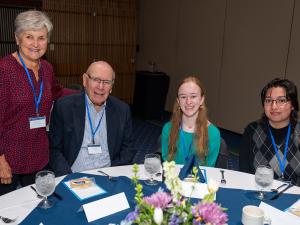
The forum opened with remarks by President Williams and Ithaca mayor Alan Cohen. Two panel discussions, focusing on the topics "Who We Are," Where We Are," and "Where We Want to Go" and featuring the students, followed. The students introduced themselves and gave a brief explanation of their own experiences with racism. Then the floor was opened up to questions from the audience. Anne Brous, associate professor of sociology, and Sean Eversley-Bradwell, social studies teacher at the Alternative Community School, served as facilitators. Several panelists spoke of their frustration at the way some courses are taught. A high school junior complained that the Holocaust was barely discussed in her history classes, making her feel that her own Jewish heritage was being undermined. An IC cinema and photography major said that too many films depicting women and minorities as second-class citizens or victims are used as examples of "fine cinema." "The discussion was too polite, but it was a good first step," said one Ithaca High School student afterward. Assistant provost Tanya Saunders, in her closing remarks, said, "What we've learned today is there is much left to do. Nevertheless, I have hope because of the things students have said today. I think they're much more aware than we give them credit for. We need to do this again." A follow-up session is already in the works for the fall semester. The participants and audience dined together
at a campus dining hall, allowing them to continue discussion
of the issues raised during the forum. They then watched the
Houston town hall meeting on a huge screen. The forum closed
with a discussion on race and stereotypes in professional and
college sports, led by athletics director Betsy Alden and minority
affairs director Keeon Gregory. The unanimous consensus was that
more must be done to increase the numbers of minority representatives
in sports teams' front offices. Photo credits: |
ICQ Home Page |