Meet four alumni and a professor who
help people by practicing "alternative" health
care.
 |
Acupuncture |
Homeopathy. Naturopathy.
Holistic medicine. Chiropractic. Acupuncture. Hypnotherapy. These
words have become rather mainstream as alternative,
or complementary, health care has risen in the public mind and
esteem. Numerous clinical studies give evidence of the effectiveness
of acupuncture, chiropractic, and other so-called "nontraditional" (although
they have rich and long histories) health care practices. Some
well-respected medical schools, such as that at Tufts University,
are starting to train traditional doctors to understand complementary
medicine practices.
As policy makers, ever pragmatic and concerned with cost efficiency,
learn more about its successes, integrative health care has become
a focus of federal public health efforts. Funding for the National
Center for Complementary and Alternative Medicine at the National
Institutes of Health has grown steadily. And the public wants it
to continue. The NIH estimates that alternative health care is
a $21-billion-a-year industry. About a third of Americans visit
an alternative practitioner at least once a year (we'd love to
hear from you if you are one of them), and this percentage is likely
to increase.
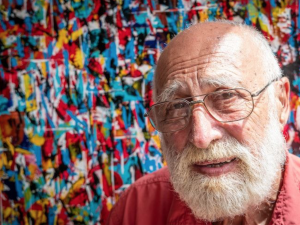
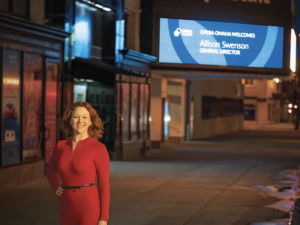
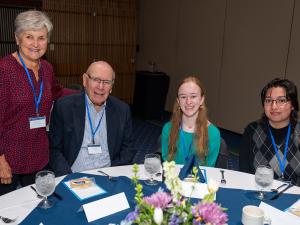
Here we introduce five alternative health care providers with
IC connections, scattered across the country from Ithaca to Phoenix:
Besides having
Ithaca College in common, they share a devotion to healing and
a passion
for
patients.
Photo by Christine Schaeffer |