
H&S Dean's Office
Job Hall, 3rd Floor
Office Hours
8:30 am - 5:00 pm, Monday - Friday
Dare to Ask Big Questions
Learn to think rationally, inquire deeply, solve problems responsibly, and inspire change. In Ithaca College’s School of Humanities and Sciences, you’ll learn from and collaborate with a world-class faculty consisting of researchers, change-makers, writers, artists, humanists, and scientists. You’ll join a community of H&S alumni who are making their mark in such organizations as Oxfam, NASA, Poets & Writers, the Rockefeller Foundation, and the Brooklyn Botanic Garden, among others.
Programs
The School of Humanities and Sciences (H&S) offers liberal arts programs in the physical sciences, social sciences, art, and humanities. The centerpiece of every H&S program is hands-on research, collaboration, and creative activity.
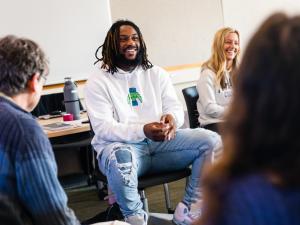
Learn About the School of Humanities and Sciences
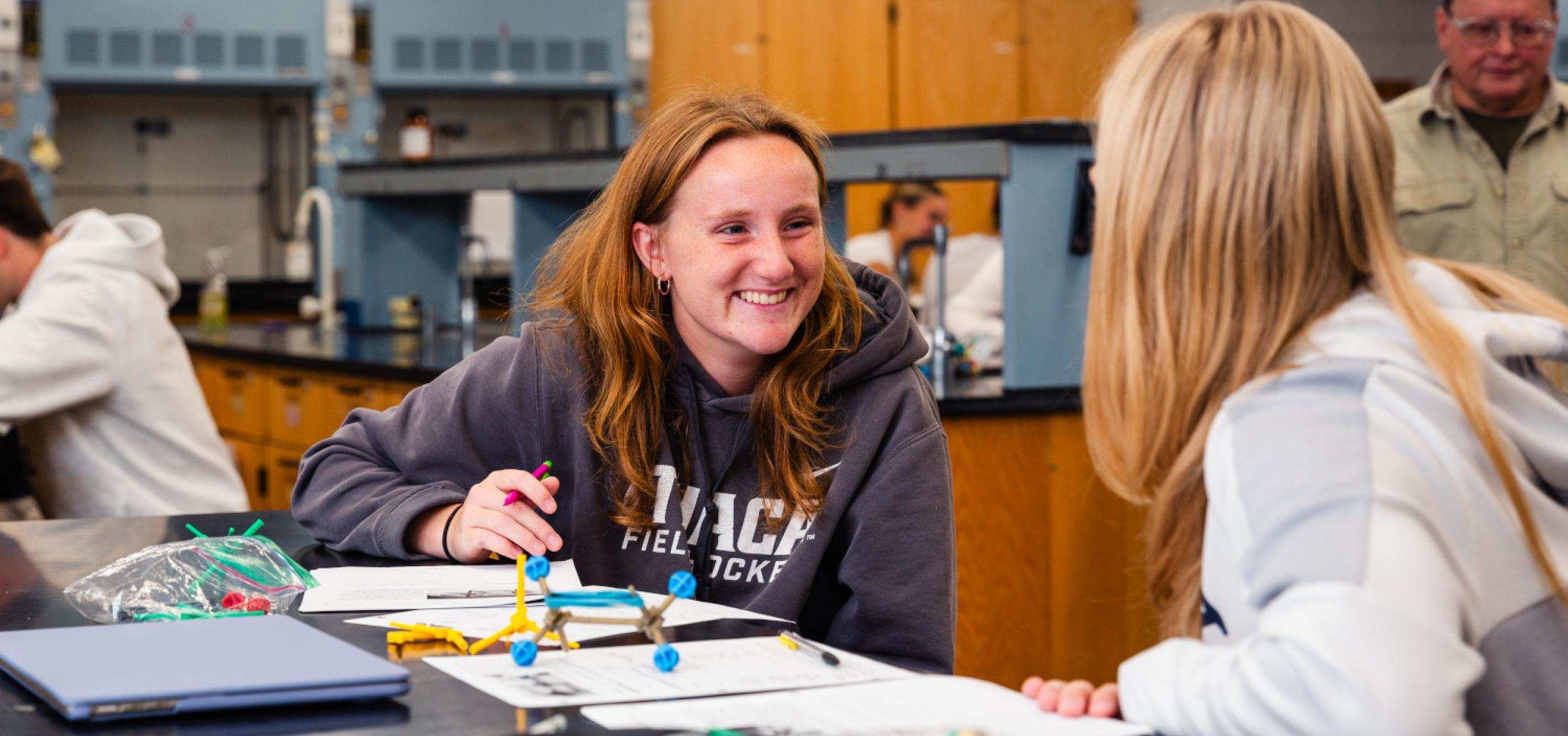
Find opportunities for engagement in every program. Conduct research in state-of-the-art laboratories, be mentored by dedicated faculty, apply theory in hands-on internships, and more.
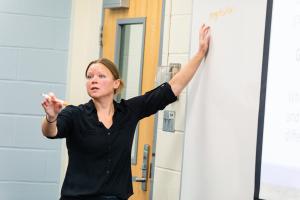
Faculty and Staff
In the School of Humanities and Sciences, your professors are also your collaborators, your mentors, and your cocreators.
Beyond the Classroom
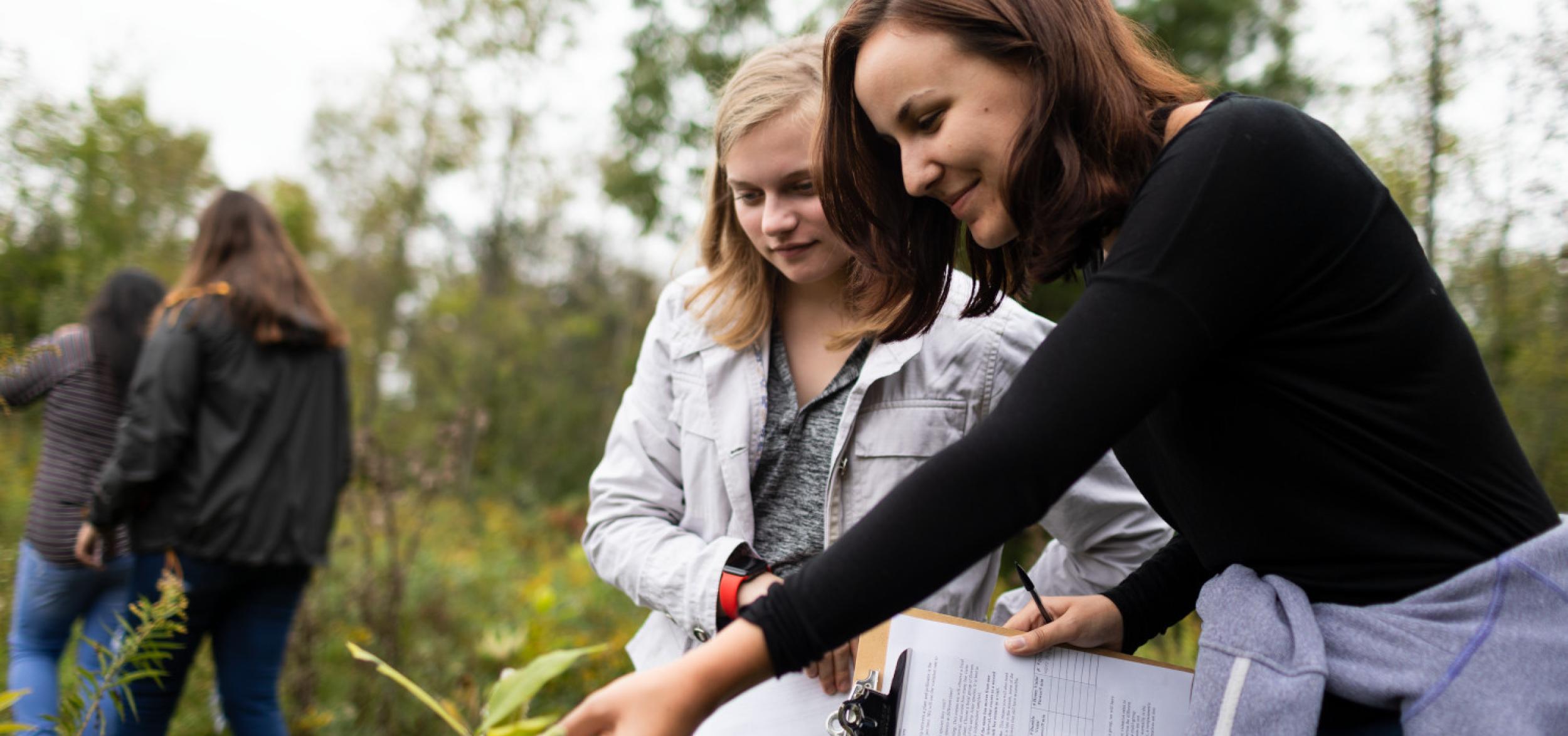
Encounter transformational moments in the lab or on the IC Natural Lands, in our makerspace, as a summer researcher working closely with a faculty member, or in unexpected conversations across our dynamic campus.
Student Experiences
Meet socially engaged change-makers and exuberant thinkers through clubs, societies, and events brimming with opportunity.
50+
Undergraduate Programs
With social science majors, preprofessional programs, humanities majors, and more — H&S positions you to learn, grow, and thrive.
1,650
Undergraduate Students
Join a community of eager learners, thoughtful researchers, and lifelong friends.
How a Degree from H&S Can Change Your Life
When you join our alumni community, you will carry opportunities for transformative collaboration and learning into your career, your relationships, and many other aspects of your life
Forewords: The Ithaca College Story
H&S students, faculty, and alumni make an impact that reverberates through industries, schools, and communities around the world.
Previous Slide
Next Slide

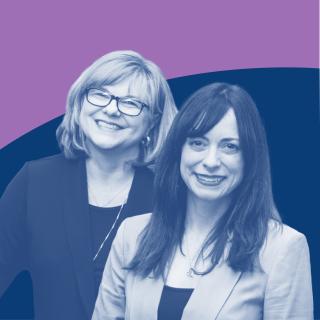

Beth Ryan
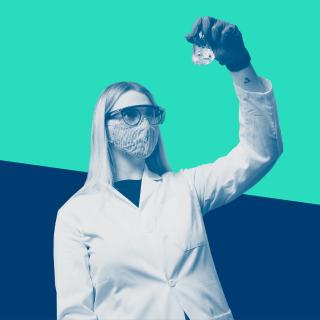
Researching Tomorrow’s Solutions
Beth Ryan is unapologetic about nerding out to biochemistry and what might just be the coolest job ever: designing the future of medicine.
Read On
Alex Wilson '77
Turning Our World Around
Alex Wilson ’77 knows the best way to prepare for climate disaster is to expect it—and plan how to bounce forward when it strikes.
Read On
Antara Sen & Beth Ellen Clark Joseph
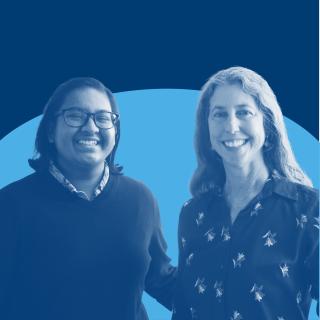
Landing Out-of-This-World Opportunities
On a NASA mission, Antara Sen ’22 and Professor Beth Ellen Clark Joseph set national research and lifelong friendship into motion.
Read On
Lisa Corewyn & Kari Brossard Stoos
Collaborating Wildly
From IC to Costa Rica, two faculty members forged an unexpected and unwavering partnership to save an endangered species.
Read On
Elisa Rodriguez
Reading the Future
Elisa Rodriguez ’14 is helping to shape tomorrow’s critical thinkers one student at a time.
Read OnNews from Our School
The science, arts, and humanities programs at IC have a lot to write home about: groundbreaking achievements in applied research, student and faculty awards, impactful student organizations, and so much more.
Playing Goalie, Not Favorites
Student-athlete Kate Lawrence ’24 presents research on the impacts of parental favoritism at national conference.
Student Speaker Selected for 2024 Ithaca College Commencement
Graduation ceremony scheduled for Sunday, May 19.
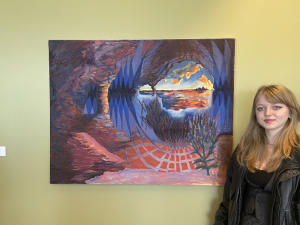
On Display
Art exhibition in Provost’s office showcases student talent.