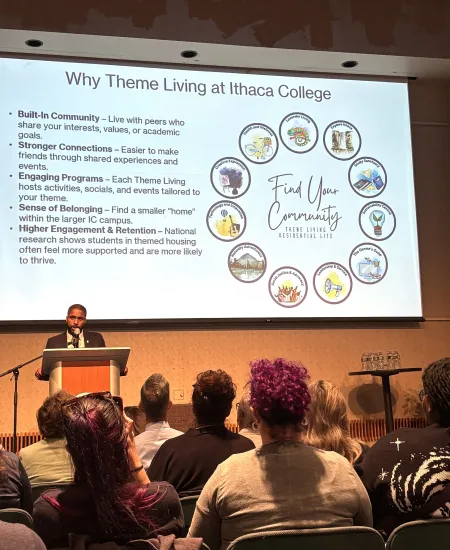
“In the interest of leaning into our mission of educating, engaging, and empowering through theory, practice, and performance, we are now requiring all first-year students to participate in living-learning communities,” he said.
Bazile noted that such communities have been shown nationally to have both academic and social benefits, creating a better sense of belonging and providing opportunities for students to foster teamwork, leadership, and communication skills while gaining increased confidence and cultural competencies.
Rock Hall, vice president for enrollment management and student success; and Tim Downs, senior vice president for finance and administration and chief financial officer, provided brief enrollment and budget updates.
Hall said that the college has exceeded its goal for the size of the entering class, with the entire campus deserving credit for this successful effort.
“We are already working on future strategies,” Hall said. “So thank you for this current win under our belt and thank you in advance for the partnership and the effort that it will require to duplicate this success in the future.”
Downs noted that despite the good news for this year, the budget deficit that resulted from missing the enrollment target in previous years means ongoing work is needed.
“We're in a very different position this year thanks to the admissions and enrollment team helping make sure that we weren't coming off of our number,” said Downs. “But even with that said, I want to highlight that our numbers are down from where we were in the last budget year. And that's why we had to go through all of the exercise of the administrative study to get us squared away.”
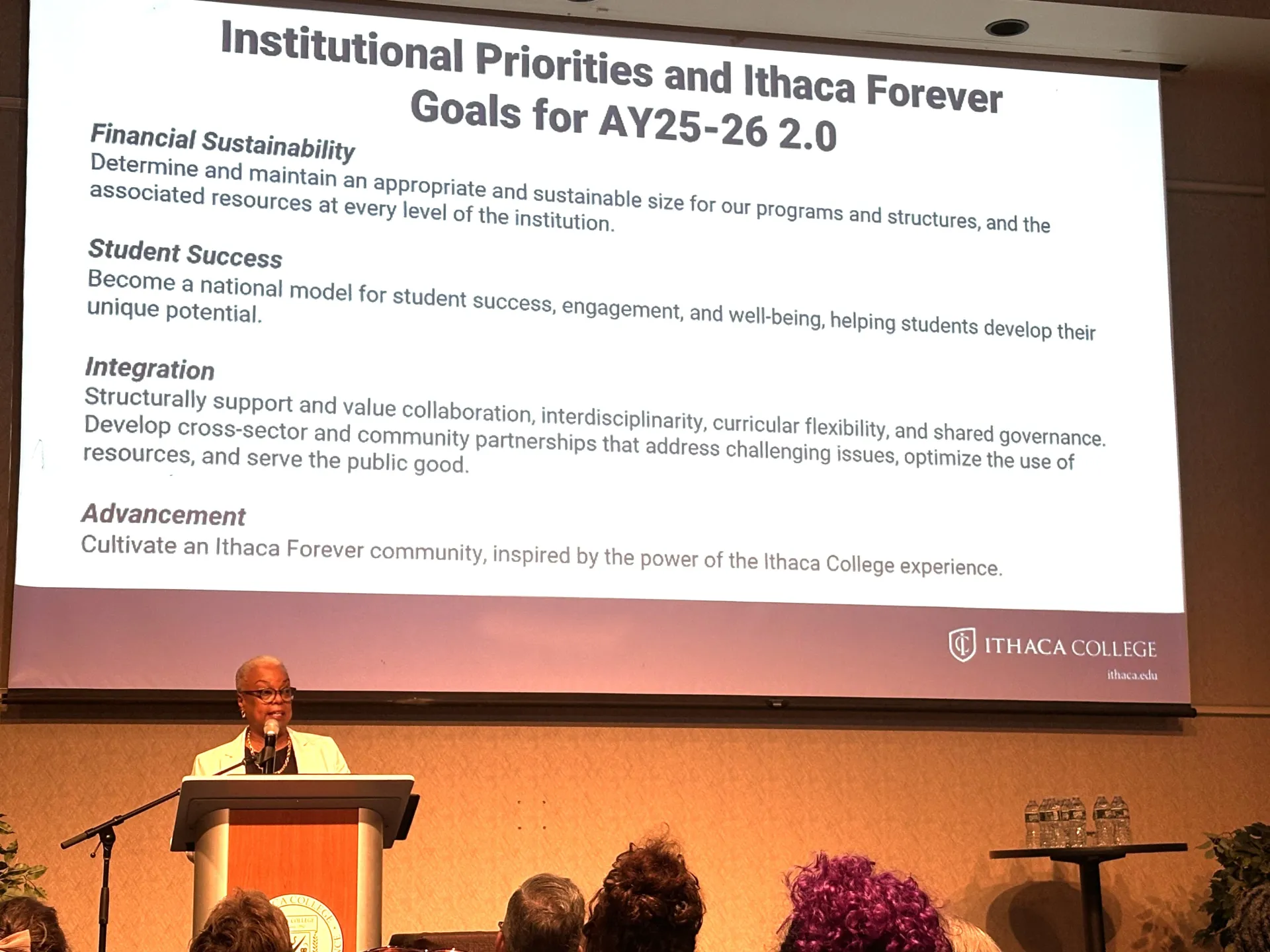
President Cornish concluded the gathering by highlighting the following institutional priorities for the 2025-26 academic year:
Financial Sustainability
Determine and maintain an appropriate and sustainable size for our programs and structures, and the associated resources at every level of the institution.
Student Success
Become a national model for student success, engagement, and well-being, helping students develop their unique potential.
Integration
Structurally support and value collaboration, interdisciplinarity, curricular flexibility, and shared governance. Develop cross-sector and community partnerships that address challenging issues, optimize the use of resources, and serve the public good.
Advancement
Cultivate and Ithaca Forever community, inspired by the power of the Ithaca College experience.
Cornish noted that action has already begun on many of these priorities, such as the launching of the Academic Support Center, partnering with Tompkins Cortland Community College to create direct pathways to IC from specific programs, and working with local and regional employers, including Centralus Health, the City of Ithaca, and Tompkins County, to ascertain future workforce needs and to align IC’s curriculum and offerings with those needs.
“These efforts reflect our belief that higher education must be connected, responsive, and impactful, both for students and for our communities,” said Cornish.
She then invited the campus community to join her and the senior leadership team on October 21 for the State of the College meeting, “to more definitively share where we are, where we are going, and how we are going to get there.”