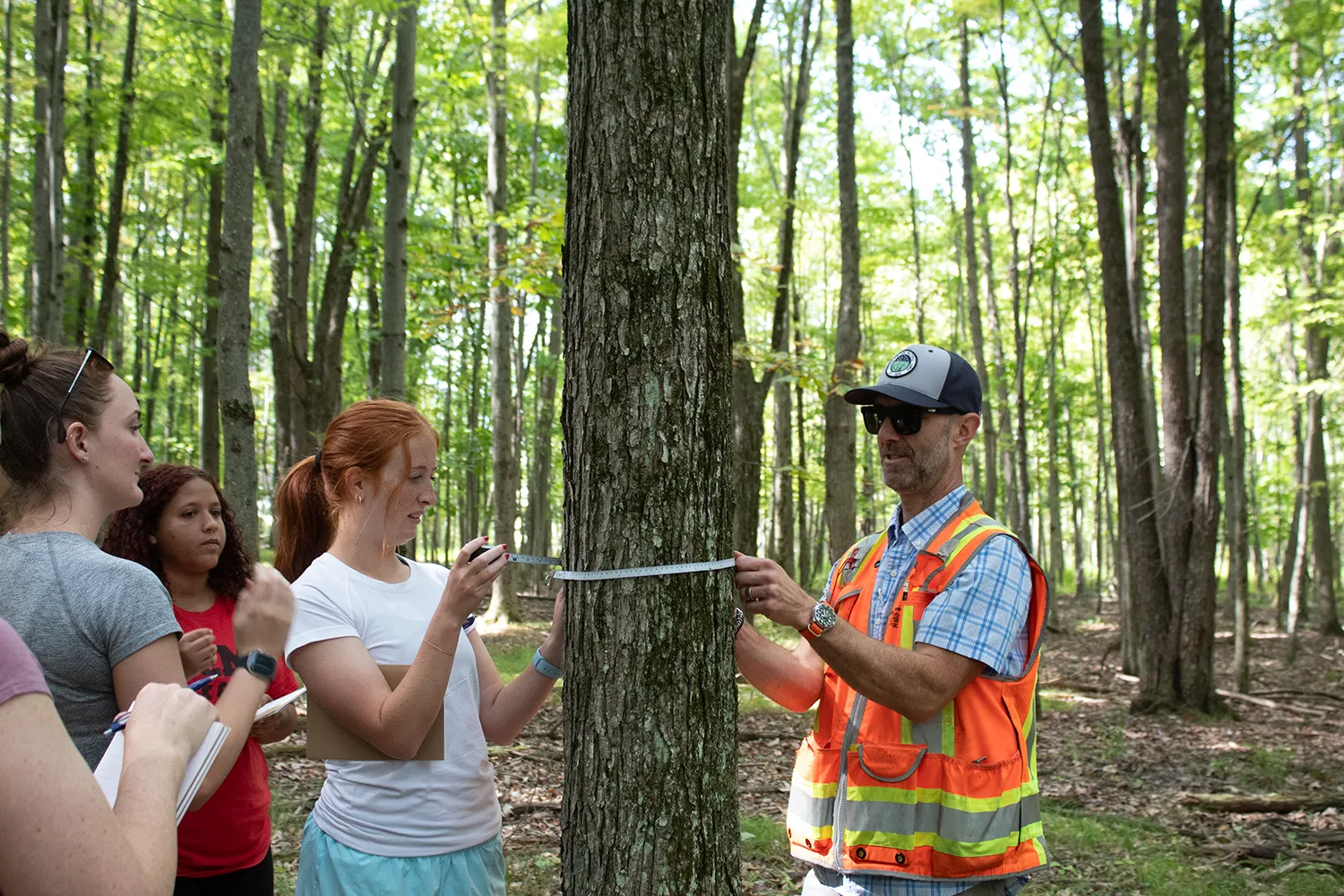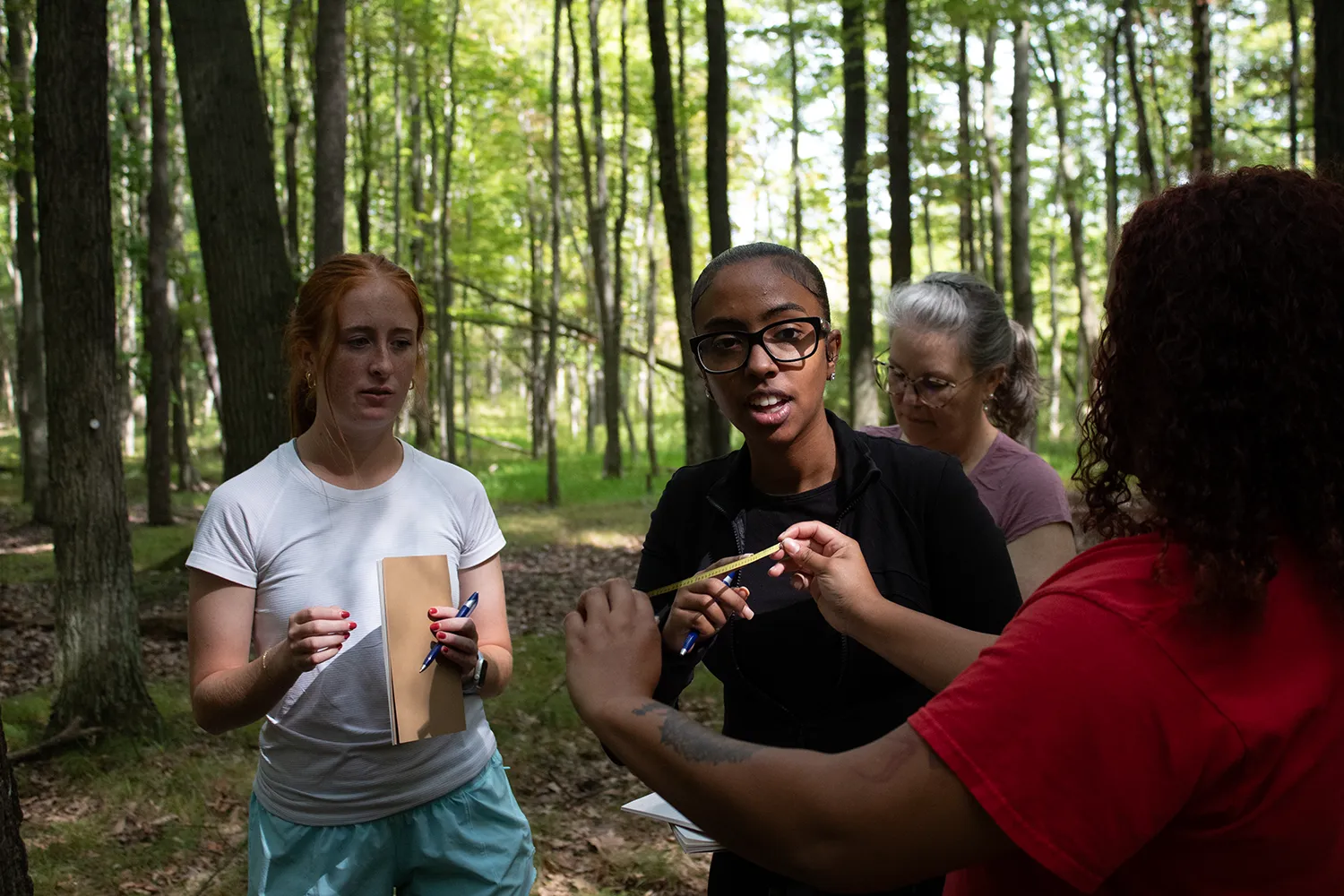
On a crisp fall afternoon, with golden sunlight filtering through the trees, a short walk into Ithaca College’s Natural Lands reveals an unexpected scene. Scattered across the forest floor, clipboards in hand and measuring tapes wrapped carefully around tree trunks, a group of graduate students works methodically, recording numbers and comparing notes. At first glance, it looks like a biology or environmental science field lab. It is not.
These students are enrolled in a graduate-level accounting course called Contemporary Issues in Accounting, taught by Associate Professor Margaret Shackell. Their task—measuring the diameter of trees—is part of a lesson on carbon sequestration, a concept that sits at the intersection of environmental sustainability and business performance. It is also a vivid illustration of how accounting, often stereotyped as little numbers in tiny boxes for tax filings, is in fact deeply connected to some of the most pressing challenges of our time.
Carbon sequestration—the process by which trees and plants absorb and store carbon dioxide from the atmosphere—is a formidable term, but its implications are both practical and profound. The amount of carbon stored in a forest can be quantified, reported, and— increasingly—valued. For businesses, institutions, and governments navigating sustainability goals, regulatory expectations, and stakeholder scrutiny, these measurements matter. They influence strategy, investment, and long-term viability.
And at the center of that measurement work are accountants.
That idea bears unpacking. Accounting, at its core, is the discipline of counting, measuring, recording, and analyzing information to support decision-making. The field encompasses a wide range of roles: tax accountants who focus on compliance and planning; management accountants who guide internal strategy and performance or forensic accountants who investigate irregularities. While the public image of accounting often conjures images of dense spreadsheets and narrow columns of numbers, the reality is far broader—and far more consequential, if not a little exciting.