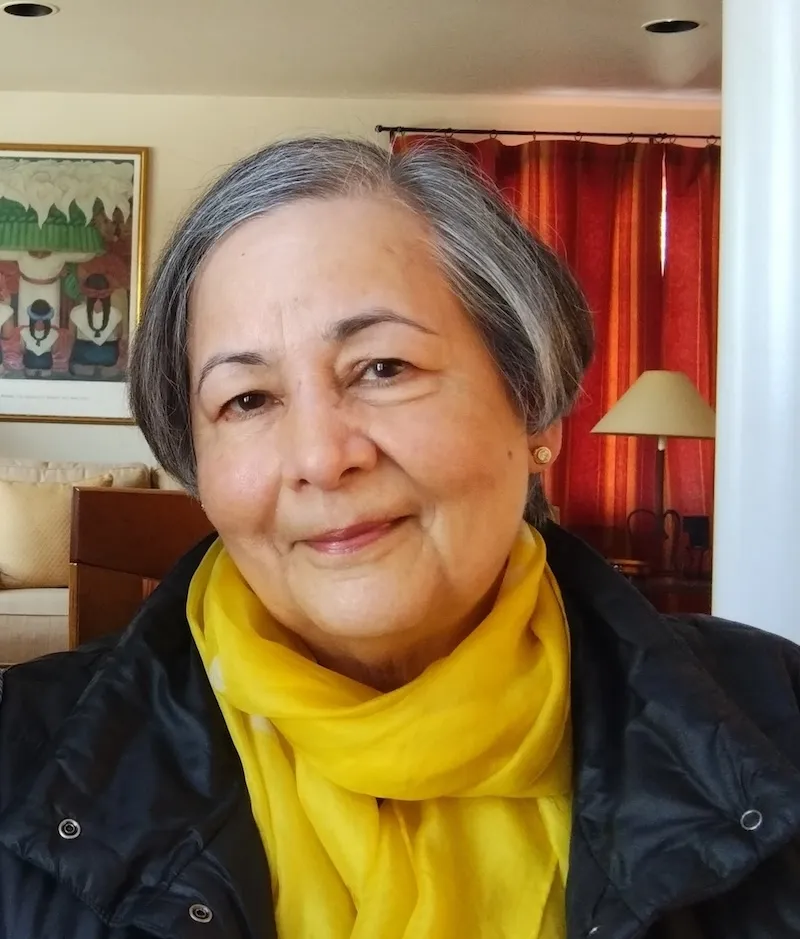
Headshot

Asma Barlas

Professor Emerita, Politics
School: School of Humanities and Sciences
Specialty: Interested in Qur'anic hermeneutics; Muslim religious and intellectual history; "Third World" and Identity politics; Race & Colonialism.
C.V.2026 - barlas.cv26_2 (pdf)

Career trajectories & Academic degrees

I was hired by the Politics department in 1991 and retired from it in 2020. For half this time, I served as the (founding) Director of the Center for the Study of Culture, Race, and Ethnicity and, in Spring 2008, also held the Spinoza Chair in Philosophy at the University of Amsterdam, the Netherlands. However, my career path began in 1976 when I joined Pakistan's Foreign Service (Diplomatic Corps), but from which I was fired in my sixth year on General Zia ul Haq's orders for having criticized him. I then became the assistant editor of an opposition paper, The Muslim, until leaving for graduate studies in the U.S. in 1983, where I was later granted political asylum. 

My degrees include a Ph.D. (with distinction) in International Studies from the University of Denver, U.S., an M.A. (first position) in Journalism from the University of the Punjab, Pakistan, and a B.A. in English Literature and Philosophy from Kinnaird College for Women, Pakistan.
Scholarly & Other writings

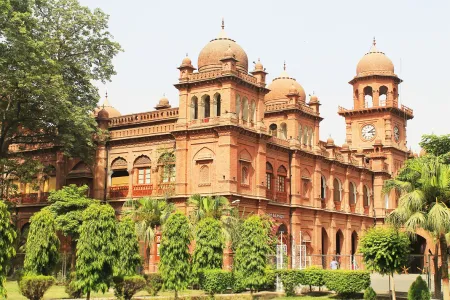
Punjab University

University of the Punjab, Lahore, Pakistan.

Most of my scholarship is about configurations of colonial, sexual/ textual, and epistemic politics and power. In my first book, I drew on Antonio Gramsci's concepts of hegemony and a passive revolution to explain the differing political trajectories of Pakistan and India after their independence from British colonial rule in 1947. In the next, I outlined an antipatriarchal hermeneutics of the Qur'an (Islam's scripture) as a way to contest its traditional and secular/ feminist readings as innately male-privileging. (I continue to make a case for an ungendered Islamic theology and Muslim women's right to equality from within the framework of the Qur'an's teachings.) Finally, for some years following 9/11/01, I critiqued the West's millennium-long history of Othering Islam in academic and popular writings. The latter also include a weekly column for the Muslim, op-eds in The Daily Times, Al-Jazeera, The Guardian, Open Democracy, and New Statesman, as well as poetry and short-stories.

Believing Women in Islam : Unreading Patriarchal Interpretations of the Qur'an (University of Texas Press, 2002) has been translated into Bahasa Indonesian (2005), while derivative essays have appeared in Arabic, Bengali, Spanish, Dutch, German, French and Portuguese. A revised edition was published in 2019 (in the U.K. by Saqi) along with A Brief Introduction, co-authored with David R. Finn.