Serving nutritious, good tasting foods around the clock for 4,500 students is no small feat. Each breakfast, lunch, dinner, afternoon coffee, and late-night snack served on South Hill comes from Campus Dining. The venues include two dining halls—Terrace Dining and Campus Center—and nine retail locations positioned around campus at the Campus Center, School of Business, Library, Roy H. Park School of Communications, Towers residence community, and Center for Health Sciences. Campus Dining does it with care and consideration for accessibility—where can hungry athletes just finishing evening practice get dinner and where can early-bird students on the go get breakfast? The staff gives special consideration to diets and allergens: Kevin Grant, one of IC’s two executive chefs, was the first person in the country to establish an allergen-free dining hall for gluten and nut allergies. IC does not take its food lightly.
Be Our Guest
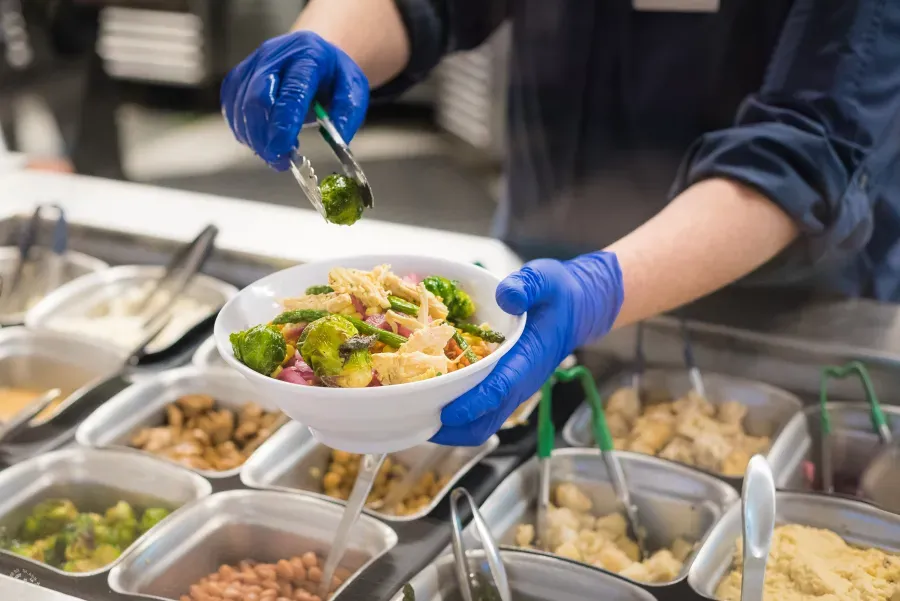
A Campus Dining staff member prepares a fresh salad.
A Campus Dining staff member prepares a fresh salad.
“We serve 7,000 to 8,000 meals a day. And we do it right. We do it with high quality, and we do it with very trained people. We do it healthy. We do it to accommodate the needs of all students, and not only what their dietary needs are but also their lifestyle needs."
Reginald Briggs, senior director of dining services
Reginald Briggs, senior director of dining services, runs the program. He says, “We serve 7,000 to 8,000 meals a day. And we do it right. We do it with high quality, and we do it with very trained people. We do it healthy. We do it to accommodate the needs of all students, and not only what their dietary needs are but also their lifestyle needs.”
To understand scale, let’s look at the numbers. Those delicious acai bowls everyone loves? Campus Dining moves 400 to 500 a day. Paninis? Six hundred a day. Subs? Five hundred a day. The numbers are more staggering in the dining halls—the campus shows up in force and helps itself to an average of 4,500 breakfasts, 9,600 lunches, 8,700 dinners a week.
What makes a dining program great? Ryan Kehoe, director of food systems, says it’s safety, great tasting food, and responsiveness. Campus Dining has it all.
Let's start with safety.

Campus Dining employee (dressed for Halloween) next to a banner for Thrive, an allergen-free dining alternative on campus. Photo Credit: Katie Roisen
Any reputable chef worth their table salt is concerned with safety, and IC’s are no different. Safety means considering every student, including those with allergens. Chef Grant, executive chef at the Terrace and Towers Dining Halls, is a Master Trainer in the AllerTrain program, a nationally accredited food allergy training course, in which every Campus Dining employee is certified. IC’s Campus Dining offers gluten-free, vegetarian, vegan, dairy-free, and kosher dining options all day, every day. Briggs reports that there are about 50 students on campus who have specific dietary requirements, and for those students, IC offers consultations with the executive chef to prepare customized meal plans that ensure each student can eat safely and nutritiously. For some students, that might mean living in apartments where they can have their own kitchen. Briggs tells a story of one student with an allergy to protein who needed a specific pasta. Campus Dining worked with the family to get that specific pasta—from a medical supply company—and each night the dining staff cooked a customized meal for that student.
That is the level of care Campus Dining offers.
But what about good taste? Glad you asked!
Jack Applegarth, executive chef at the Campus Center, says the best thing about Campus Dining is how “having control over the kitchen and recipes allows us to get creative.” The meals served in the dining halls start as recipes developed by trained chefs, are tested to see if they are a hit among the students, and are then produced over and over to scale quantity and ingredients. Once the culinary team is confident the recipe can be prepared each time with consistent results, it is added in the proverbial recipe box, or in this case database, for future meal planning.
Those early-morning pastries at Scribe Cafe and cookies for an afternoon treat? They are all baked on campus in a commercial bakery on the second floor of the Terrace dining hall area. Every confection—from snickerdoodle cookie to brownie to chocolate chip muffin to buttery croissant—is baked right here on campus.

Chocolate pie made on IC's campus. Photo Credit: Katie Roisen
Chocolate pie made on IC's campus. Photo Credit: Katie Roisen
The dining halls always serve up fan favorites like chicken fingers and mac ’n’ cheese, the omelet station (popular with athletes), and the ice cream bar on Mondays and Fridays in the Campus Center. However, staff also like to keep things interesting, offering variety and exposure to worldly cuisines.
Last semester, the Terraces ran a Chef Showcase series, preparing recipes from world-renowned chefs. An entire meal might feature modern Mexican cuisine from Enrique Olvera of Netflix’s Chef’s Table or dishes by José Andrés of World Central Kitchen. During Women’s History Month, each Wednesday dinner featured recipes from famous women chefs such as Julia Child and Irma Rombauer. Foods and treats are often themed to events on campus—like offering a “Chi-tanic” (a chia tea) when IC’s Theatre Department was performing the musical Titanic. The Campus Center also hosts two “blow-out” events each year, one of which always features Mardi Gras–inspired fare.
Where does responsiveness come in?
The ways a campus-wide dining program considers responsiveness includes recipes and also logistics: is the food accessible when and where the students are? This is where Briggs talks about the Exchange Program, implemented two years ago to meet the lifestyle needs of students. This program allows students to use a “swipe” (the term used for how many meals a student has left in their meal plan) for a faster grab-and-go style meal of their choosing—a sandwich or salad, a drink and cookie, apple, or banana. These meals can be pre-ordered on Grubhub or selected from pre-made options at the retail location. The Exchange Program supports on-the-go students who may have a kitchen in their residence hall or live off campus. This addition of convenience has suited the campus community; the Exchange Program now accounts for 30% of daily use.
This year, the Terrace Dining Hall is going to stay open on hour later, until 10:00 pm. Briggs considers this a huge win, citing the athletes who get out of practice late and are hungry. They used to only be able to access meals on the Exchange Program, that grab-and-go style of prepared food. Briggs and Kehoe realized they were selling an average of 700 of those meals a night. Each Exchange meal is a one-off, made only for that evening, and with that volume requiring a whole staff person to prepare. The data informed them that students want to eat later in the evening. Now students will have the option of soups, salads, and main courses later at night to keep them going.
The one thing Campus Dining needs more of? Input. Students and families are encouraged to ask questions, say hello, and let staff know what they want to see and need. This is how a great dining program is built.

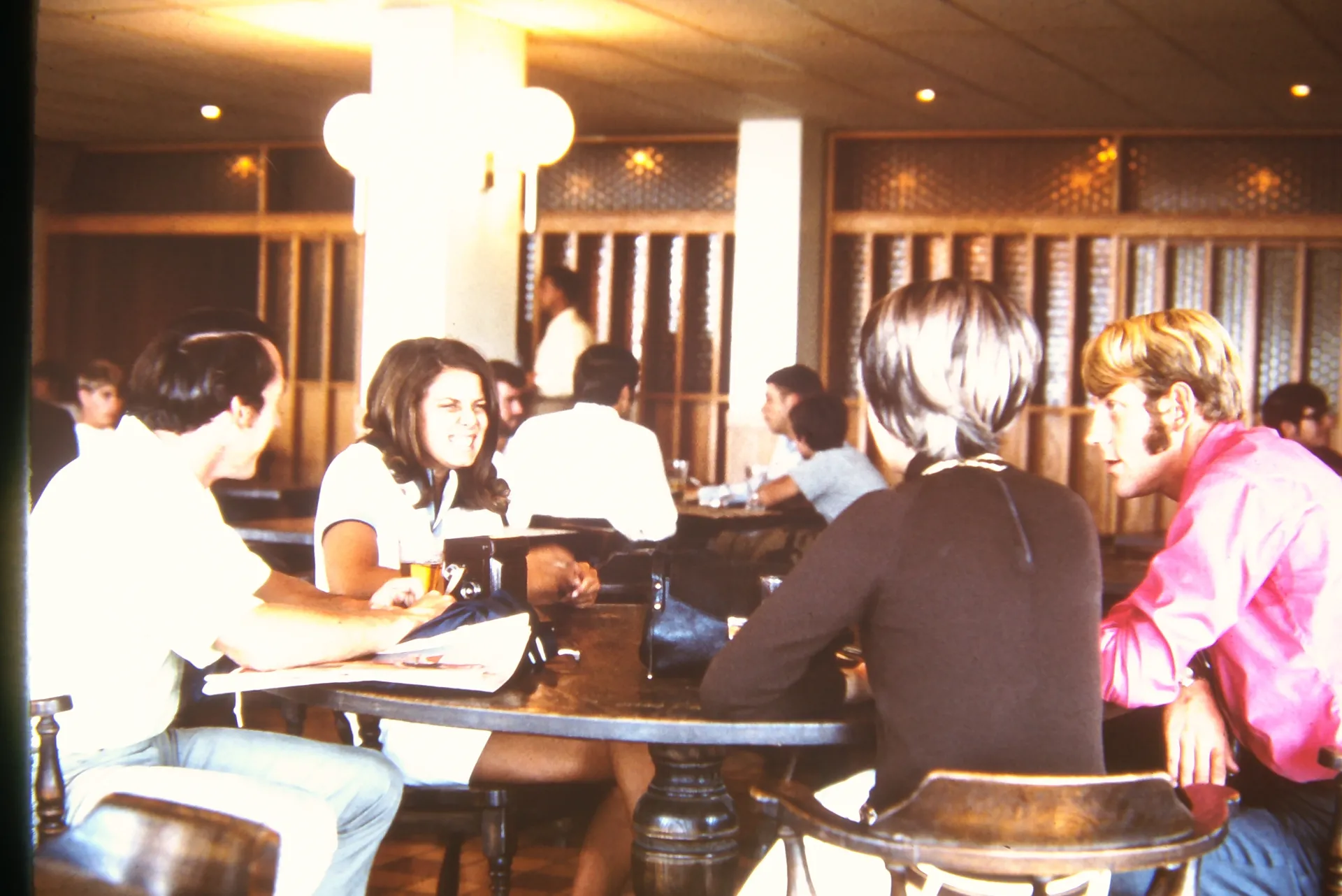
The Towers Dining Hall in 1965
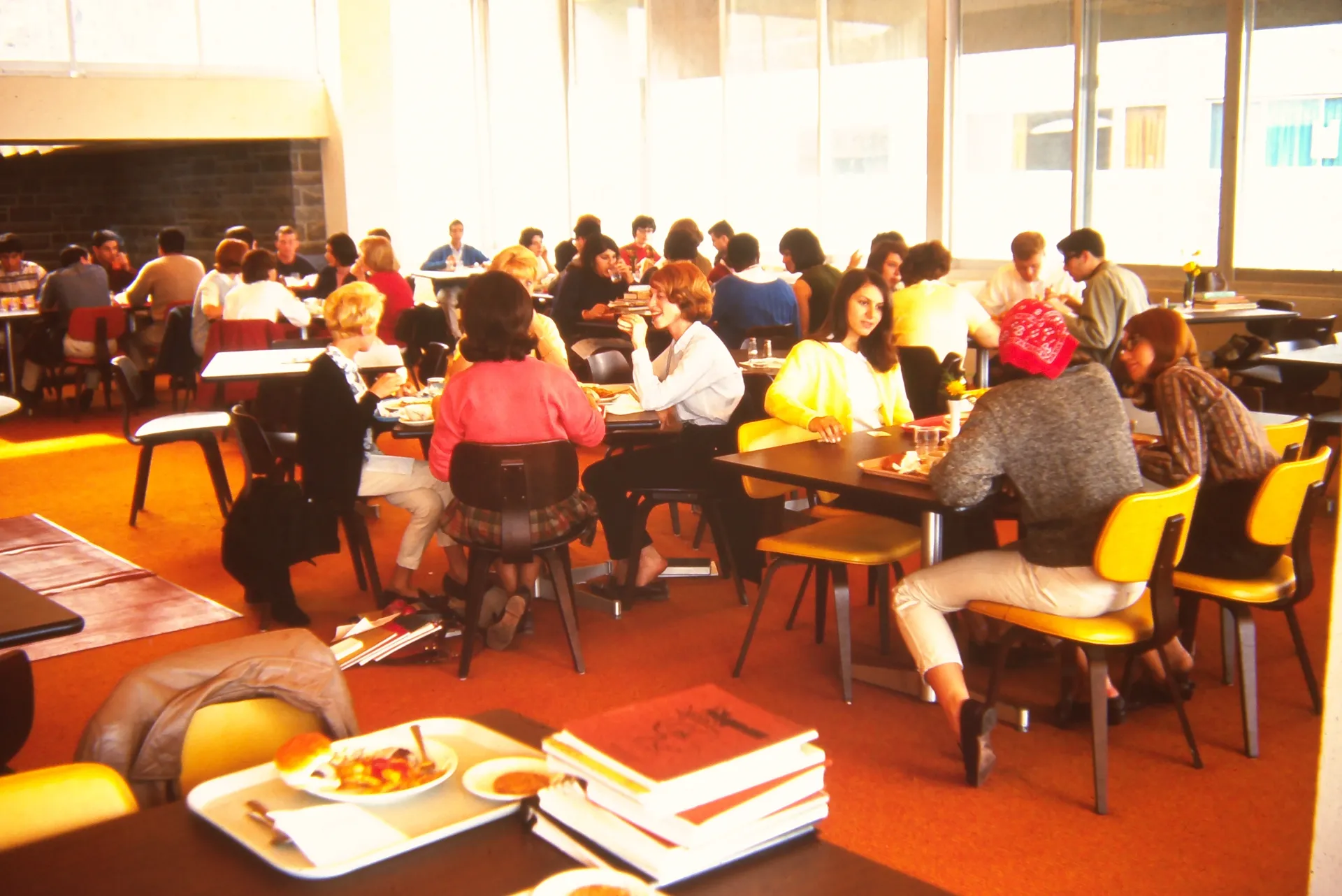
Towers Dining Hall, 1973

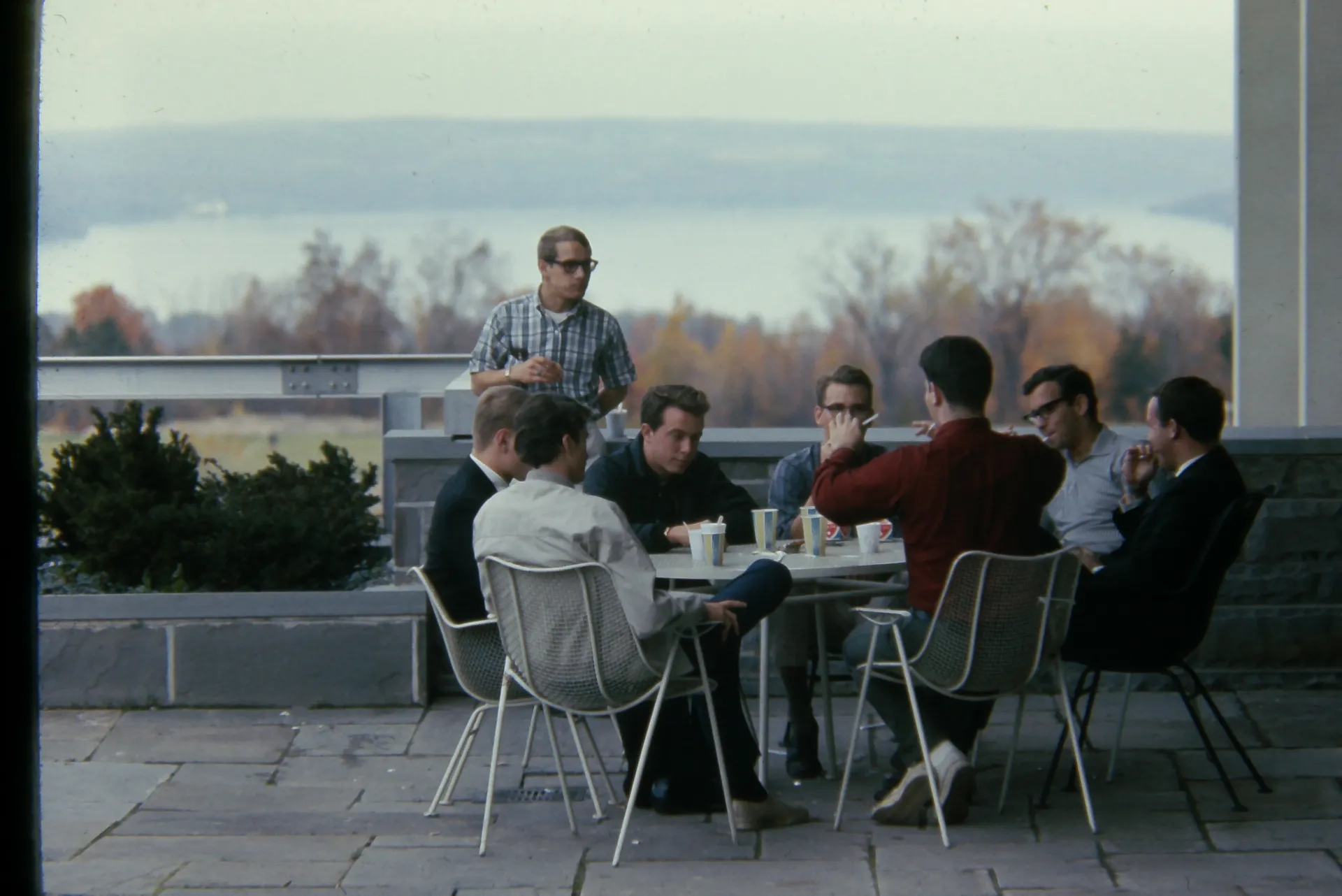
Students dining outside, 1965
Campus Dining offers safe, nutritious, and delicious options for every person on campus. They are ready to serve you. Dining options and meal plans are ready to be explored.