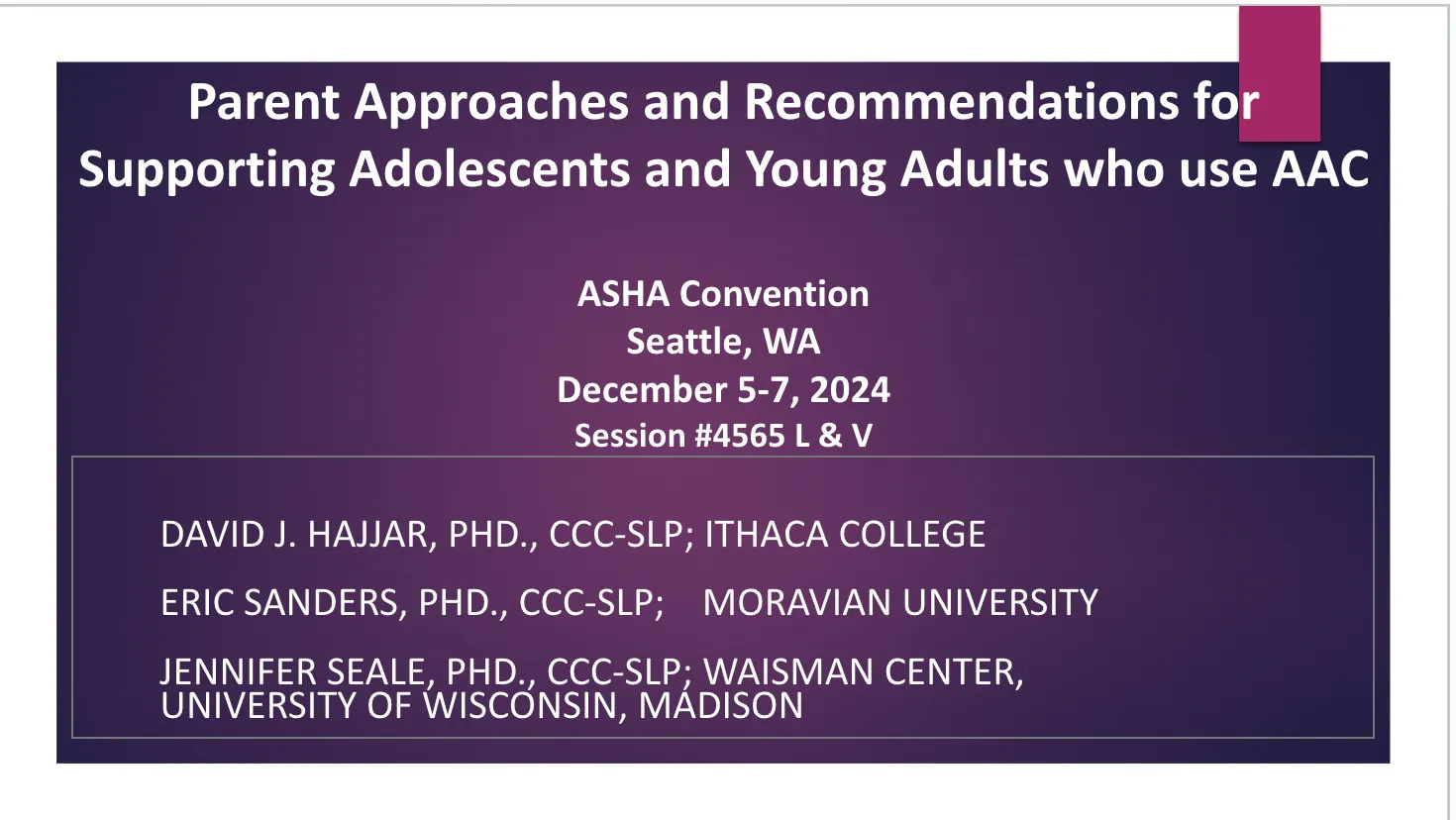
In their research technical session, Dr. Hajjar and Dr. Sanders presented a portion of their interview research with parents of older AAC users. Parents and caregivers of individuals who use AAC have a significant, long-term role in a variety of aspects related to communication, participation and engagement in the lives of their children.
The purpose of this research was to gather the lived experiences from parents of adolescents or young adults who use AAC with particular focus in how they approach participation, communication and finding support. The presentation focused on how parents supported their older children through life transitions while supporting AAC systems and the unique challenges and barriers for their children who use AAC.
RESEARCH & SCHOLARSHIP: 2024-PRESENT
ASHA 2024: TECHNICAL RESEARCH PRESENTATION
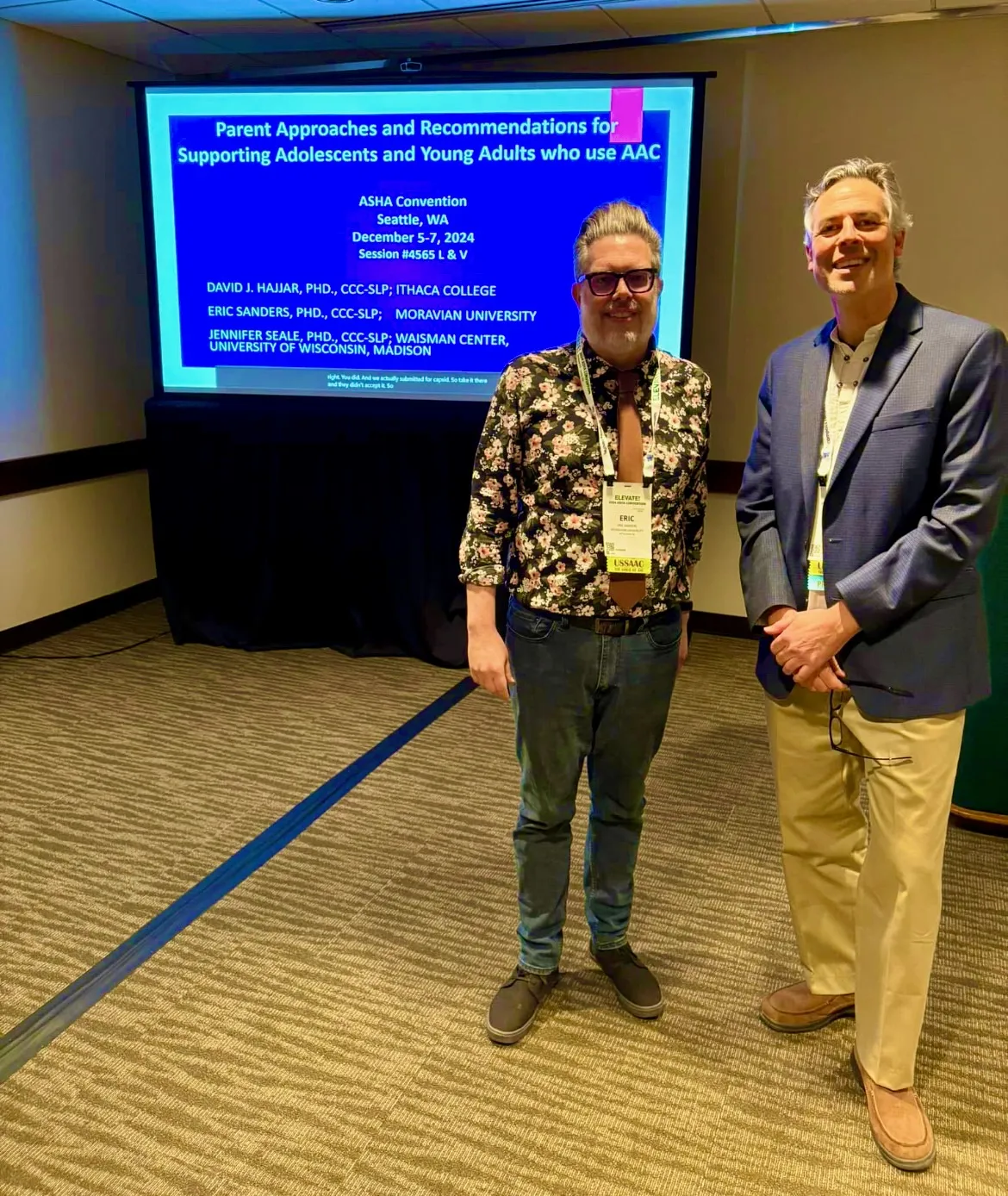
Dr. Hajjar and Dr. Sanders presenting at ASHA 2024 in Seattle, WA
Dr. Hajjar and Dr. Sanders presenting at ASHA 2024 in Seattle, WA
ASHA 2024: View from the Space Needle in Seattle, WA

Mount Rainier at dusk, December, 2024
Taking a break from ASHA 2024. Headed to the Space Needle at dusk to experience the day and night views across the beautiful city of Seattle.
ISAAC 2025: Virtual Conference
Project Title: Moving from the margins to the center: Advancing inclusive qualitative research practices with AAC users
In this virtual oral presentation, Dr. Noyes and Dr. Hajjar present a scoping review in the area of common methodological approaches used in qualitative research studies that have successfully included AAC users as co-researchers. The aim of the review was to better understand emerging best practices and recommended strategies for designing inclusive, accessible qualitative research protocols that accommodate the communication needs of AAC users. The authors promote the inclusion of AAC users in all aspects of research by recognizing their role as valuable and essential contributors to the evidence base in AAC and related fields.
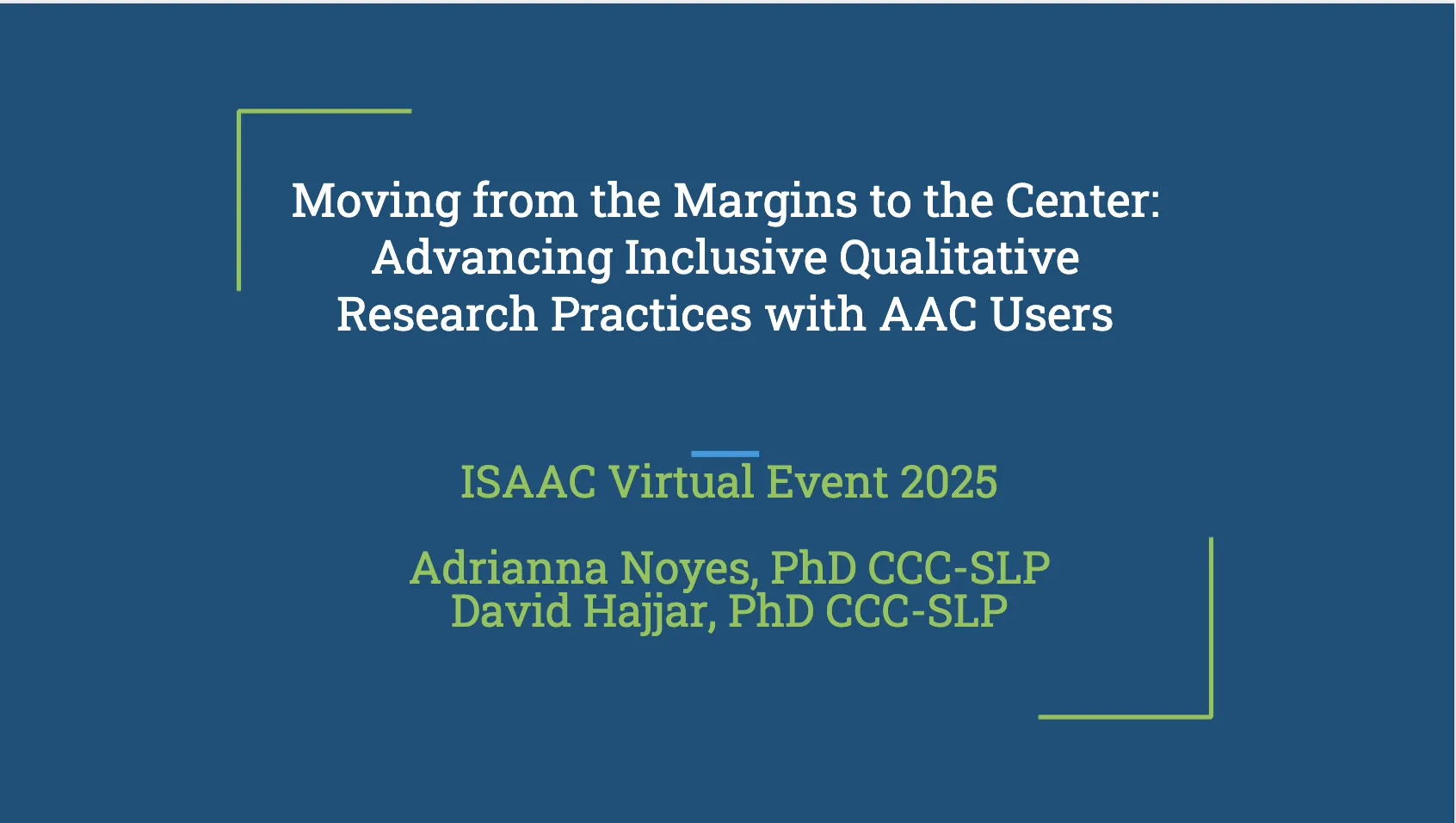
Title Slide for ISAAC 2025 Virtual Conference
Title Slide for ISAAC 2025 Virtual Conference
ASHA CONVENTION 2025: WASHINGTON, D.C.
Project Title: Supporting participation of adolescents and young adults who use AAC: Parent perspectives and experiences.
In this technical research presentation, Dr. Hajjar and Dr. Sanders present the last data set about participation across educational, vocational and community settings.
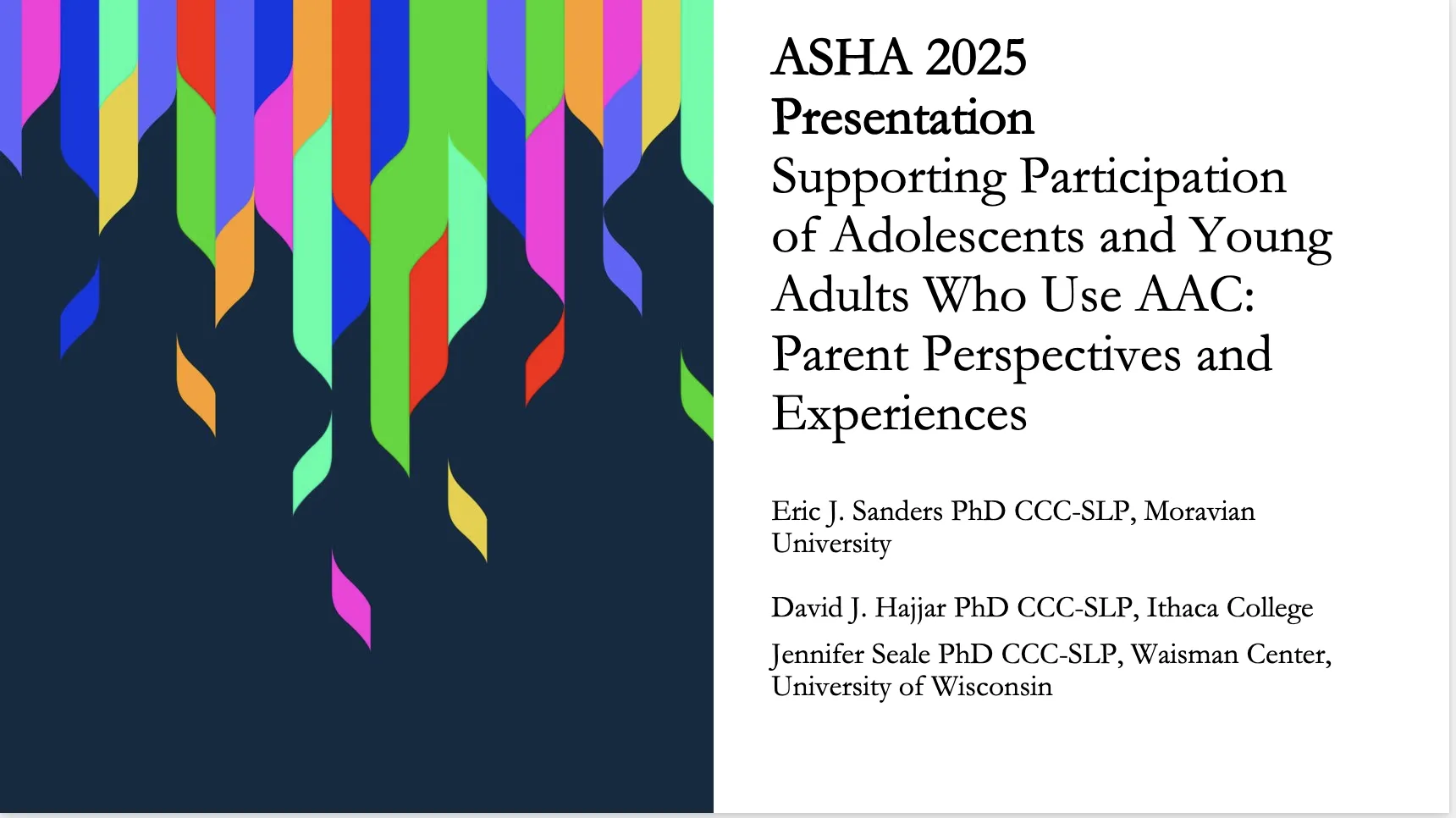
Title slide from ASHA 2025 Technical Research Presentation.
Title slide from ASHA 2025 Technical Research Presentation.
Project Title: Using a participatory action framework for collaborative development and use of visual scene displays.
Dr. Hajjar and alumna Rachel Cass, M.S., CCC-SLP presented a creative project as a technical clinical session at the ASHA 2025 Convention in Washington, D.C. See the handout to review the slide deck. The project involved the capture and collection of digital media in community based recreational settings. Media was collected, edited and developed into visual scene displays for an adolescent AAC user. The project used a participatory action framework through the stages of digital media collection, development and use.
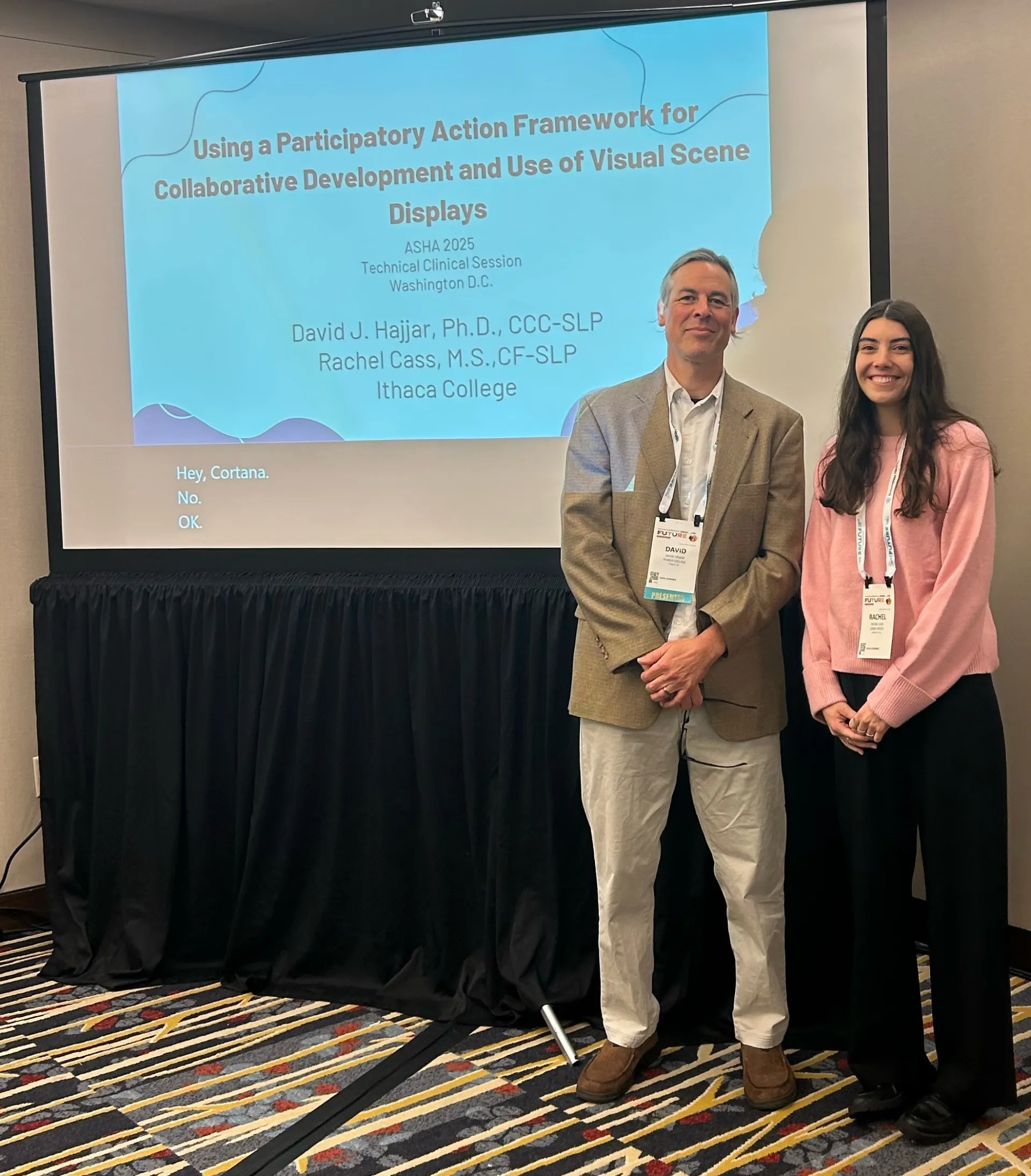
Dr. Hajjar and Rachel Cass presented a technical clinical session at the 2025 ASHA Convention in Washington, D.C.
Dr. Hajjar and Rachel Cass presented a technical clinical session at the 2025 ASHA Convention in Washington, D.C.
AAC Lab at Ithaca College
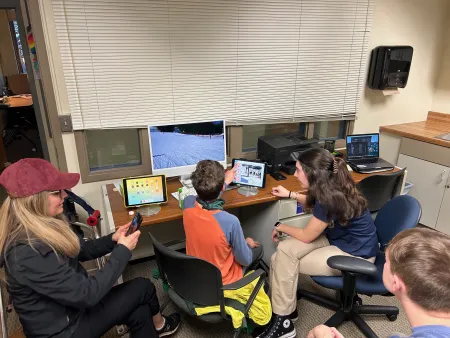
Rachel Cass, Jack Punda, AAC user, and family work in Dr. Hajjar's research lab.
In this photo taken in Dr. Hajjar's research lab, alumna Rachel Cass and Park School Documentary film alumni Jack Punda work with an individual who uses AAC and his family. Jack supported the individual to collect digital media during ski lessons at the Greek Peak Adaptive Snowsports program in Virgil, NY. The media was then used to develop visual scene displays, which are a tool to support communication and social interaction using AAC.
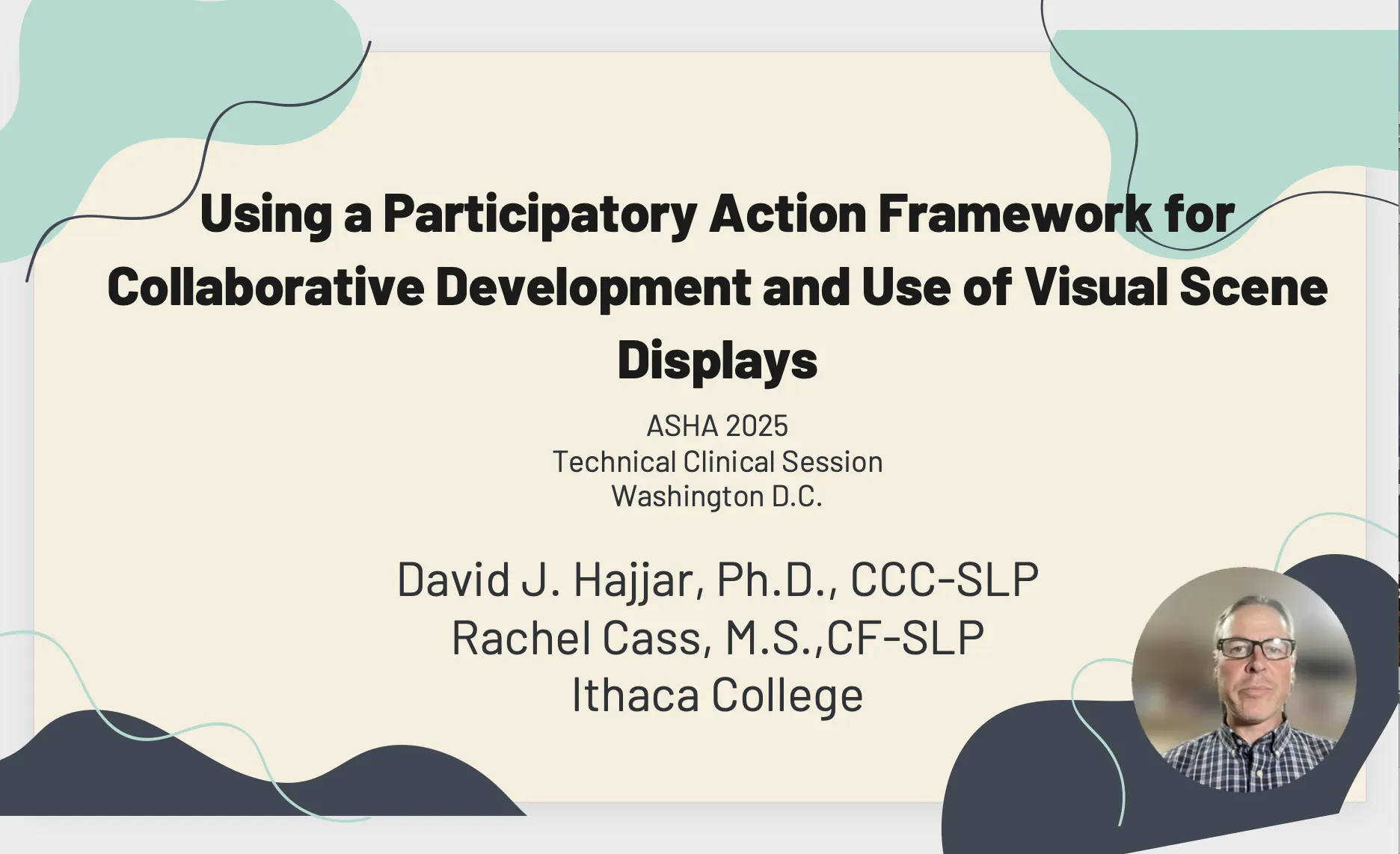
Title Slide for presentation by Dr. Hajjar and Rachel Cass at ASHA 2025.
Title Slide for presentation by Dr. Hajjar and Rachel Cass at ASHA 2025.