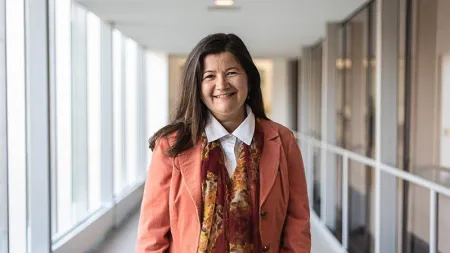
Ana Paula Pimentel Walker

Headshot of Ana Paula Pimentel Walker. Ana Paula is wearing a salmon suit coat with a white collared shirt. Is posed in a long hallway.

Ana Paula Pimentel Walker was a 2012-2013 anthropology scholar and is an associate professor in urban and regional planning at the University of Michigan’s Taubman College of Architecture and Urban Planning. She teaches graduate courses in participatory planning and community development, comparative housing, environmental planning, award-winning capstones, and comparative planning law. She investigates how disenfranchised communities engage with urban governance and evaluates the significance of participatory institutions in planning socially and environmentally just cities. Her research has been funded by the National Science Foundation and the Foundation for Urban and Regional Studies.

Pimentel Walker’s research goal is to identify institutional designs and participatory planning practices that have the potential to produce socially inclusive and environmentally sustainable cities. She is conducting three research projects: 1) “The Significance of Participatory Institutions in Planning Socially Just Cities,” 2) “Legal Institutions and the Planning Process: Conflicts between the Right to Adequate Housing and to a Sustainable Environment,” and 3) “Migrant-run organizations (MROs) in Michigan,” which documents the nature and scope of immigrant- and refugee-led community-based organizations and civic inequalities in the undercounting and underfunding of MROs.

Pimentel Walker received a PhD in anthropology from the University of California, San Diego; a Master of Urban Planning and a Master of Arts in Latin American studies from the University of California, Los Angeles; and a law degree from the University of Cruz Alta in Brazil.

Armando Lara-Millan

Headshot of Armando Lara-Millan. Armando is wearing a black Starter jacket.

Armando Lara-Millán was also a 2012-2013 scholar in the Department of Sociology. He is currently an Associate Professor in the Department of Sociology at UC Berkeley, a former Robert Wood Johnson Foundation Scholar, and earned his PhD in Sociology from Northwestern University in 2013. He is a faculty affiliate of the Berkeley Economy and Society Initiative, Center for the Study of Law and Society, and the Center for Science, Technology, Medicine and Society.

Armando is fascinated by how powerful organizations, whose actions affect the life fortunes of large numbers of people, use language to reshape critical material resources; that is, he examines how these organizations use culture and cognitive processes to recast the economic worth of resources that many people depend on, purchase, or are subject too (e.g. jail and hospital space, crime, advanced medical technology, or even property value). He has examined such processes in the context of urban poverty governance within large American urban jails and public hospitals, and is now turning his attention to the gigantic American healthcare system, digital crime platforms, and venture capital firms.

His work has appeared in the American Sociological Review, Criminology, Social Problems, and among others, the American Journal of Sociology. His book “Redistributing the Poor: Jails, Hospitals, and the Crisis of Law and Fiscal Austerity” was published with Oxford University Press in 2021 and was the winner of the 2022 Distinguish Scholarly Book Award from the American Sociological Association, the 2022 Eliot Friedson Outstanding Publication Award from the Medical Sociology Section of the ASA, and the 2022 Oliver Cromwell Cox Book Award from the SREM section of the ASA. Armando is also the recipient of awards from the National Science Foundation, Law and Society Association, the Max Planck Institute for the Study of Societies, the Ford Foundation, and the Society for the Study of Social Problems.

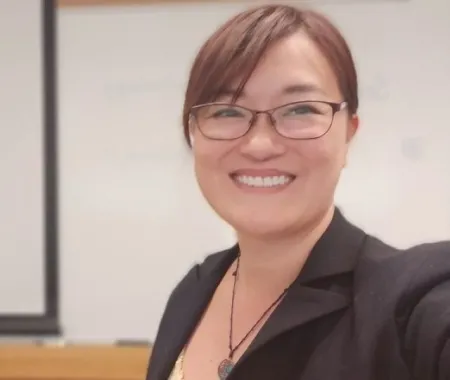
Lai Sze Tso

Headshot of Lai Sze Tso. Lai Sze is wearing a black suit jacket and glasses.

Lai Sze Tso was also a sociology scholar during the 2012-2013 academic year and has taught undergraduate courses at Massachusetts Institute of Technology, University of Michigan, Ithaca College, Aquinas College, and Chattanooga State College. To broaden the scope and rigor of my pedagogical skills, I earned two teaching certificates from the Massachusetts Institute of Technology-Kaufman Teaching Certificate, Teaching/Learning Lab and the University of Michigan-Graduate Teaching Certificate, Center for Research on Learning & Teaching.

Internationally, she is part of Mobile Medical Materials Working Group, a collective of academics, practitioners, policy makers, and healthcare system users focused on addressing the mobility and blockages of medical care, supplies, technologies, pharmaceuticals, and related critically needed materials. A concise portfolio of her work is available through the NIH's National Library of Medicine. In the summer of 2022, she began serving as a guest editor at Frontiers in Medicine and in September, she was invited to join the Editorial Board of the Asian Journal of Medical Humanities and began serving as a peer-reviewer for the International Journal of Cultural Studies. In October, Lai Sze was nominated to serve on the Sociologists of Minnesota's Board of Directors as the Faculty Representative for the Southern Region and, shortly after, in recognition of her contributions to medical health research, was nominated and inducted into Full Membership for Sigma Xi, the Scientific Research Honor Society , "an international multidisciplinary community of science, technology, engineering, and mathematical (STEM) professionals dedicated to research excellence, promoting public engagement with science, and fostering the next generation of researchers" (Sigma Xi 2022). To better integrate her teaching, research, and social advocacy for Minnesota's diverse communities, she became a MPC Affiliate Member at the University of Minnesota Population Center as of December 2022. As of January 2023, she is one of six nationally selected Population Scholars for the University of Minnesota Population Scholars Program.