Mexico/Canada, 2025
Diasporic Worldings and Body as Border: Traces and Flows of Connection
Mexico/Canada, 2025 and Canada, 2022
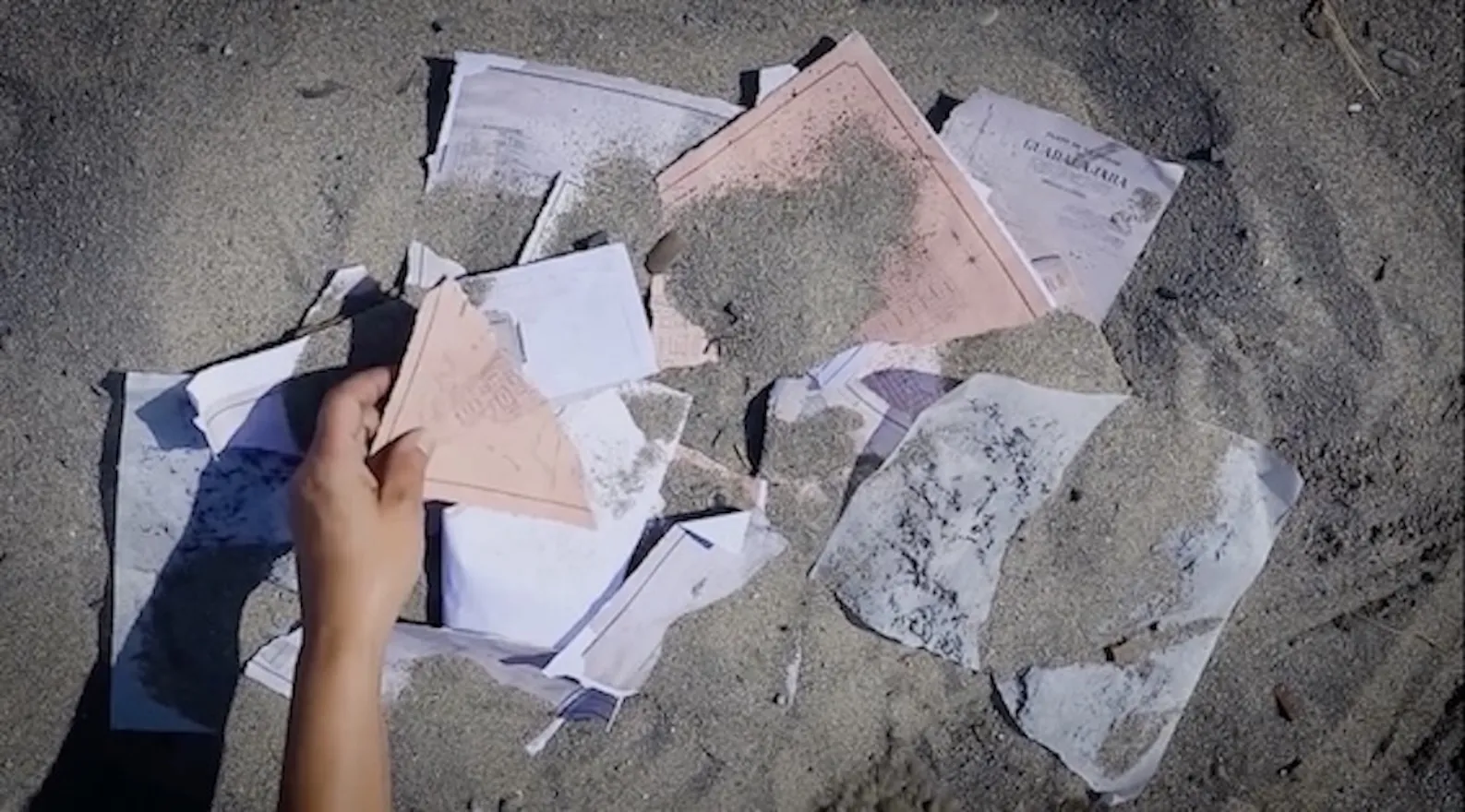
Diasporic Worldings
Diasporic Worldings
Commissioned by the Libby Leshgold Gallery at Emily Carr University, Diasporic Worldings is a single-channel video, thus far exhibited as an outdoor installation. Highlighting cartography as a performative, quasi-ritualistic practice, the video shows the artist's hands manipulating, burying, unburying and ripping up copies of maps including pre and postcolonial maps of Guadalajara and Vancouver, respectively Aceves' birth city and present home.
It also shows Aceves tracing the textures of trees, stones, and wood on paper. Images are juxtaposed on a layered immersive soundscape, including atmospheric sounds and walking. Aceves describes the work as inspired by Martinican philosopher Édouard Glissant's distinction between archipelagic thinking as fragmentary and intuitive, and continental thinking as all-encompassing and systematic, and Mexican writer Cristina Rivera Garza's use of frottage drawing as a mnemonic technique to recover an embodied connection with the world. As a celebration of diasporic artistry Diasporic Worldings is fittingly dedicated to "all migrants, and the worlds that they build through their traces/travels [recorridos]."
A collaboration with Steve DiPaola, Freya Zinovieff, and prOphecy sun, Body as Border: Traces and Flows of Connection is an immersive single-channel video, AI-driven poetic visual and auditory score. The work was created over three months as a response to the COVID-19 crisis and to the idea of the body as border. A bespoke AI system generates images and texts from materials contributed by the artists, mixing gathered visual and sound sources from around Fraser River, including bacterial cultures from water samples, and images and videos from their personal archives.
Body as Border juxtaposes past and present settler histories along a body of water and on human bodies to highlight their interconnectedness. Here the focus is not so much on celebrating but rather on addressing migration (the artists' own as all are immigrants to the area) and migrant bodies as both complicit with and objectified under colonial systems.