New Media Artist Roundtable: Art in Migrations
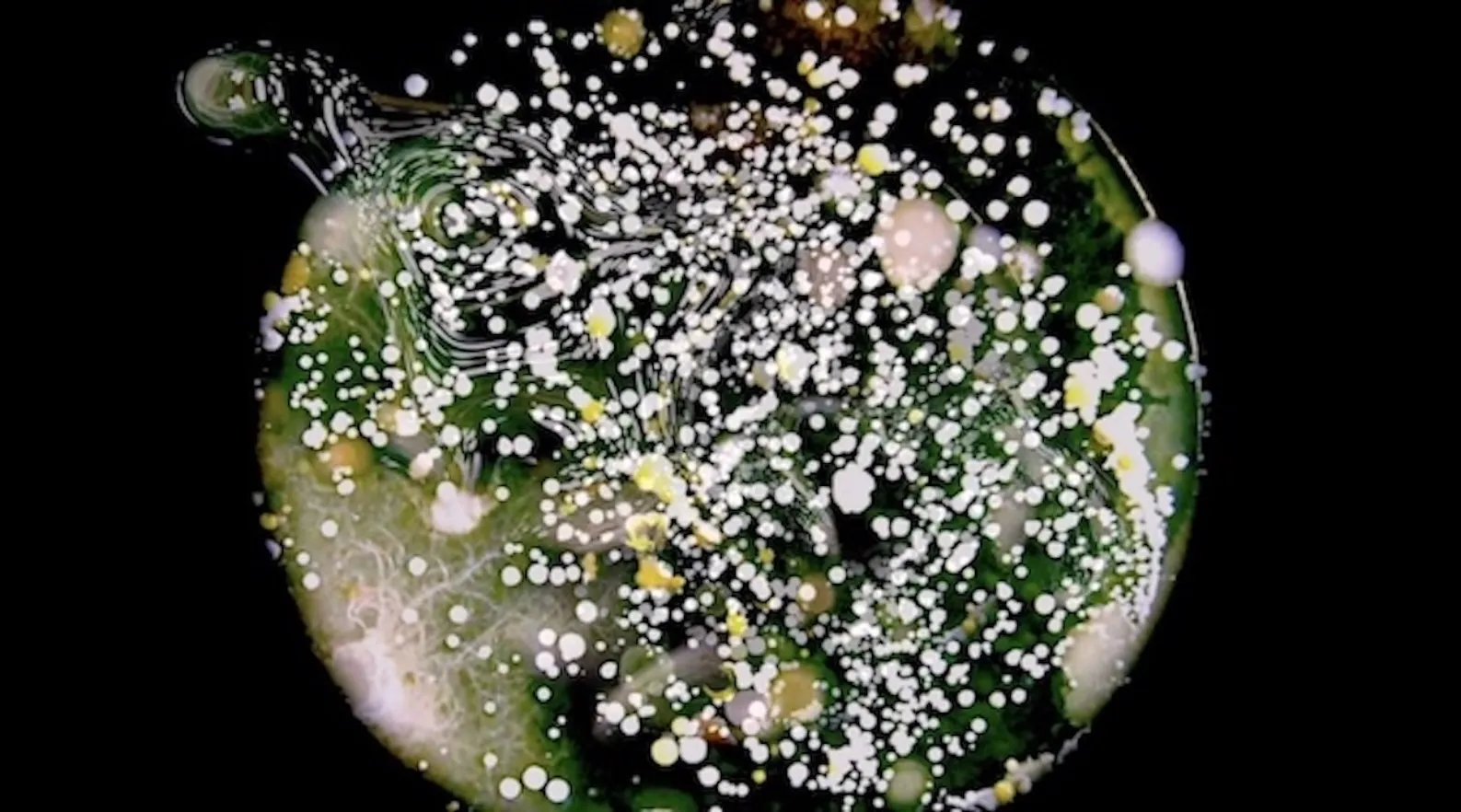
Join artists, scholars, and curators for interactive discussion of cutting-edge new media projects.

Zoom: Friday April 10, 12pm – Gabriela Aceves Sepúlveda, Imran Channa, and Sarah Shamash in conversation  (FREE EVENT)

Register online for this event co-sponsored by the Media and Society program of Hobart and William Smith Colleges.
 

Art in Migrations

Each year, FLEFF asks guest curators to highlight existing projects by new media artists whose work engages the annual theme of the festival in a variety of ways, providing new contexts for thinking and talking about the films encountered across the festival as a whole.

Curators' Introduction by Dale Hudson and Claudia Costa Pederson

Migration has always happened, but it has become more pronounced as a dominant condition of life over the past 35 years of globalization and the increasingly violent effects of global warming. Migration will undoubtedly change again as politics recalibrate, often with uncanny echoes of past migrations during the last century's decolonization and international political recalibration.

Inspired by FLEFF 2026's theme of migrations, the Art in Migrations roundtable investigates ways that artists and filmmakers have looked historically to migrations, not only of humans and nonhumans, but also of ideas and images. The works investigate how natural and built environments are imagined and shaped by multiple overlapping histories of migrations.

Gabriela Aceves Sepúlveda's two outdoor video installations, Diasporic Worldings (Mexico/Canada, 2025) and Body as Border: Traces and Flows of Connection (Canada, 2022; collaboration with Steve DiPaola, Freya Zinovieff, and prOphecy sun), depict relationships with land, place, territories, and ecosystems as creative processes where worlds develop through human and more-than-human entanglements. Diasporic Worldings centers this focus on the artist's diasporic experience, moving between her hometown of Guadalajara and Vancouver, where she works. Body as Border maps embodiment and embodied mapping by blurring the lines between physical and simulated spaces.

Imran Channa's three-channel videogame installation Promised Land (Pakistan, 2022-23) invites viewers to navigate through lands transformed by colonial and technological promises into landscapes. Images evoke the image-making practices of an "East Indies," produced by migrant filmmakers from the Netherlands, now preserved in Dutch archives. Work in 'Tilism-e-Hoshruba.exe' – including Enchanted Land (Pakistan, 2025) and Tangible Fiction (Pakistan, 2025) – examines the involuntary migration associated with the Partition of India and Pakistan in the context of nationalist fantasies and lived realities across time and technologies.

Sarah Shamash's (An)other Season (Canada, 2026) is an auto-fiction film on what it means to be alive as an artist and a woman, who can choose to travel and make art as "we live through a time of so many horrors, catastrophes, and crises." It is also a film about acknowledging that so many people have been forced to migrate under centuries of settler colonialism which continues to this day. Similarly, her Security Guards (Canada, 2008) documents migration as a foundational, if unacknowledged, element in the development of elite Western art institutions from the perspective of security guards at Jeu de Paume in Paris. Almost all immigrants, they narrate connections with the art that they guard, shaped by their critical, yet invisible, labor, and by France's colonial past, which continues in racial inequalities.

The works in Art in Migrations situate the present, not as an exceptional moment, but rather as a continuation of a massive reorganization of people and resources across the planet over the past 550 years.


Dale Hudson is Associate Professor of Film and New Media at New York University Abu Dhabi. His latest book is Documentary Habitats: Transmedia Ecologies (Indiana University Press, 2026), coauthored with Patricia R. Zimmermann. 

Claudia Costa Pederson is Professor of Art History at Wichita State University, Kansas. Her most recent book, Mexican Media Art, Ecologies, The Posthuman, and Politics (Routledge, 2025), was awarded the Andy Warhol Arts Writers Grant in 2022.