Exploring Research and Innovation in Speech Language Pathology

Speech-language pathology research at Ithaca College engages student clinicians in hands-on projects that advance evidence-based practice and support effective communication across diverse populations.

What We Do

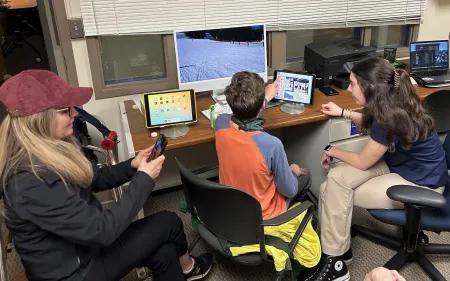
Student clinicians working in the AAC lab

Student clinicians collaborating in the AAC lab to actively support communication through assistive devices and hands-on practice.

At Ithaca College, our speech-language pathology program combines hands-on clinical care with faculty-led research in specialized labs and through community partnerships. Student clinicians collaborate closely with faculty in areas such as social communication, augmentative and alternative communication (AAC), and laryngeal function, contributing to work in the Ithaca Social Communication Lab, the GULP Lab, and the AAC Lab.

Our research addresses topics including access to early intervention, telehealth-based parent training, communication technology, and swallowing and voice function, with many projects directly shaping clinical practice in the Ewing Clinic. Students also present their work at professional conferences, such as the American Speech-Language-Hearing Association Annual Convention, building skills in research, collaboration, and evidence-based clinical care.
Our Research Labs

Our research labs bring students and faculty together to explore communication and swallowing sciences through interdisciplinary, real-world, and evidence-based work.

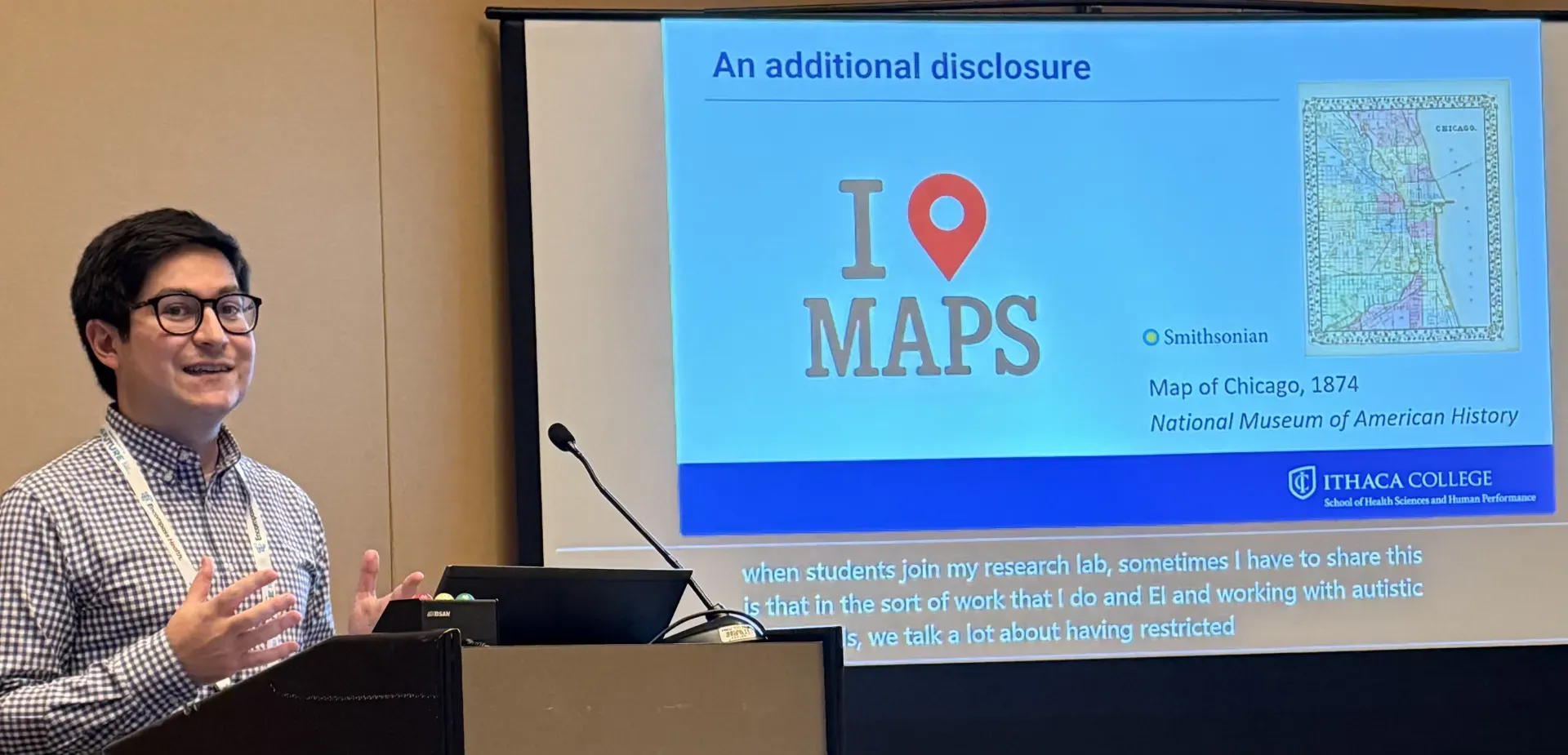
At Ithaca College, the Ithaca Social Communication Lab is directed by Dr. Zellner. The lab focuses on improving access to and quality of social communication interventions across the lifespan. Current projects include examining differences in early intervention access between rural and urban communities using GIS software, developing adult and pediatric intervention programs for the Ewing Clinic, and studying factors that influence SLPs’ use of evidence-based practice.

Get Involved: 

  • Students: Opportunities are available for undergraduate and graduate students to participate in research as assistants, through independent study, or thesis work.
  • Community Members: The lab frequently seeks participants, including autistic individuals, caregivers, and professionals. Many studies offer free services through the Ewing Clinic.
  • Stay connected via Instagram: @icsocialcomm

.

Project GORGES: Groups Overcoming Roadblocks to Growing Self-Efficacy and Skills 

Project GORGES addresses barriers to early intervention (EI) access, particularly for families in rural and underserved communities. The project explores a telehealth adaptation of the evidence-based Project ImPACT model. This parent-mediated intervention combines group-based teaching sessions with other parents and individual clinician coaching sessions with their child.

The program aims to increase access to interventions, improve parents' confidence and well-being, and strengthen the use of effective communication strategies in daily routines.

To learn more about what we're working on right now, visit the ISCL website

Gaining Understanding of Laryngeal Performance

The GULP Lab investigates how laryngeal function supports swallowing, voice, breathing, and airway protection in both typical and clinical populations. Research examines how biological and psychosocial factors interact to influence communication, nutrition, and overall well-being.

Through this work, the lab advances evidence-based approaches for assessing and treating conditions such as dysphagia and dysphonia, with the goal of improving quality of life and clinical outcomes.

Directed by Dr. Hajjar, the AAC Lab focuses on augmentative and alternative communication across diverse populations and settings. Students collaborate on projects related to interface design, communication partner training, and promoting meaningful participation in everyday and recreational activities.

The lab emphasizes interdisciplinary collaboration, partnering with faculty and students across fields such as media arts and sciences and recreational therapy, as well as with AAC users and their families.

For specific information about previous and current projects, please see Dr. Hajjar’s webpage. 

Want more information?

Contact the Sir Alexander Ewing-Ithaca College Speech and Hearing Clinic for more information and to connect with current students and professors.