The History Major

As a history major at IC, you'll do more than memorize dates—you'll conduct original research, analyze complex sources, construct evidence-based arguments, and understand how the past shapes our present. These skills prepare you for graduate school and careers in fields from law and education to business and public service.

Your Path to a Bachelor's in History!

The history major is designed to be flexible—you'll take foundational courses that expose you to different periods and approaches, then customize your path with electives that match your interests. Over four years, you'll complete 40-48 credit hours in history, leaving plenty of room to explore other passions. Many of our majors add a second major or minor, from Music to Environmental Studies to Political Science, making the most of their IC experience.

Here's What's Required:

                                                                  DEGREE REQUIREMENTS OVERVIEW     (120 Total Credits Needed) 
History B.A. Major Requirements40-48 Credits
Integrative Core Curriculum Requirements and Electives 72-80 Credits

To maintain good academic standing in the major, no more than 4 credits at the grade of C- or below may count toward your history requirements. While AP History courses can earn you college credit, they cannot be applied toward major requirements—this ensures all majors engage directly with college-level historical study at IC.

 

                                                                          HISTORY MAJOR REQUIREMENTS (40-48 Credits)
Required Core Course 4 Credits
  • HIST 45000 History Seminar and Capstone
Required History Electives 36 Credits

You'll complete 36 additional credits in history that meet the following distribution requirements:

  • At least 4 credits (but no more than 12 credits) at the 100-level
  • At least 12 credits at the 300-level
  • At least 4 credits in premodern history at the 200-level or above
  • At least 4 credits in global history at the 200-level or above
Foreign Language Proficiency 0-8 Credits
  • As a history major, you'll need to demonstrate college-level proficiency in a language other than English through the beginner level. This requirement reflects the global nature of historical study and helps you engage with sources and scholarship from around the world. You can fulfill this requirement in three ways: complete both 10100 and 10200 in your chosen language; place into 10200 based on previous language study and complete that course; or take the proficiency exam and place into 20000 or above, in which case the requirement is automatically fulfilled with no additional language courses needed. Language courses must be taken in the Department of World Languages, Literatures and Cultures at IC for a letter grade (not pass/fail), and you must earn a C- or better. Note that American Sign Language cannot be used to fulfill this requirement, and language grades count toward the department policy that only 4 credits at C- or below may apply to courses in the major. Talk to your advisor about which language might complement your historical interests or career goals.

Read How Former Student Catherine Introcaso Blended Theatre & History!

Meet Catherine Introcaso

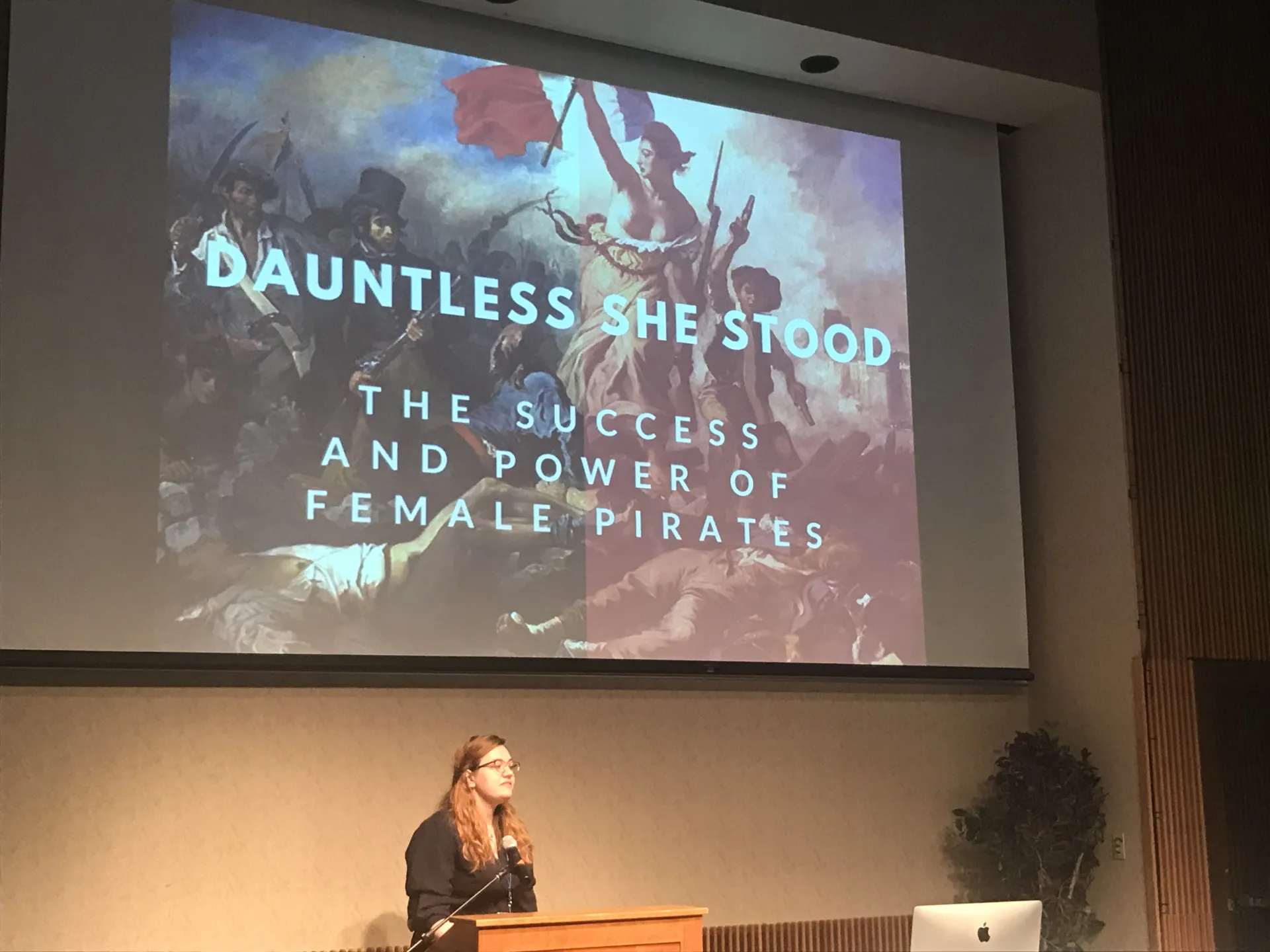
As a double major in History and Theatre Studies, Catherine’s entire collegiate career was focused around scholarship that enabled passionate interdisciplinary discourse. She believed that the beauty of history and theatre was that both fields were invested in the way that the human experience was remembered, recounted, and perceived. As a marginal studies scholar, she constantly worked to find the historical intersections of traditionally marginalized groups. Catherine often considered the ways that intersectional oppression left their traces on the larger systems of power and control. With a strong foundational knowledge in research, Catherine served as a Production Dramaturg on a number of Ithaca College’s Department of Theatre Arts productions—helping to bring the world of the play into a contextual image for everyone engaging with the work. Catherine planned to take her studies even further by applying to various graduate programs in hopes of bringing her love of marginal studies, performance, and the Middle Ages to an even higher level!  Learn more about Catherine's work here.