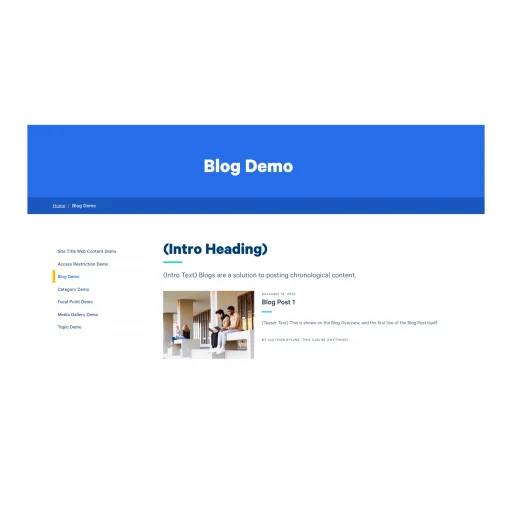
Content types determine what kind of content you're creating and, importantly, where it can live within your site's structure.

Most content on ithaca.edu is one of five types: Site, Topic, Category, Blog, or Page. These types nest inside each other, forming the hierarchy of your site.

Understanding Content Types

This nesting structure defines your URL paths, your navigation, and your visitors' experience moving through your content. This node (page) for example, is a Category inside of a Topic, inside of a Site. 

Content Types can also change the layout and visibility of subpages. This Category shows sub-pages as a list, instead of in the left-hand Menu as a Topic would.

The content type you choose also affects which paragraph components are available. Sites offer the most flexibility, followed by Topics, then Categories, Blogs, and Pages. This encourages defined sections to feel visually rich while keeping deeper pages focused and consistent.
Available Content Types

The following sections document each content type in detail, including where it can be placed, what it can contain, and when to use it. Sites and Departments are functionally interchangeable. 

The following content-type relationships are supported:

  • Site > Topic
  • Site > Category
  • Site > Blog
  • Site > Page
  • Topic > Category
  • Topic > Page
  • Category > Page
  • Blog > Blog Post
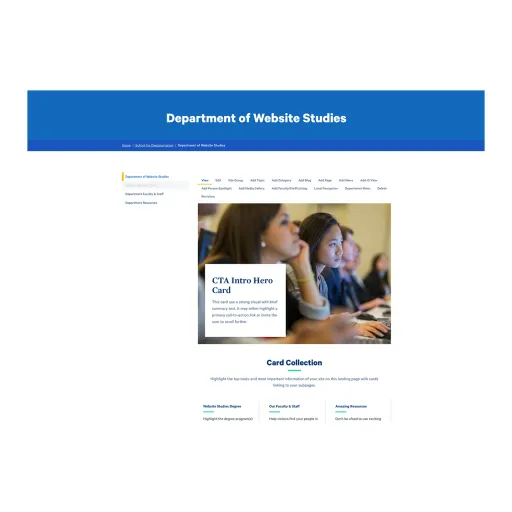
Example of a Site, the top-level landing page for an office, center, or other unit's section of ithaca.edu.
The top-level landing page for an office, center, or other unit's section of ithaca.edu.