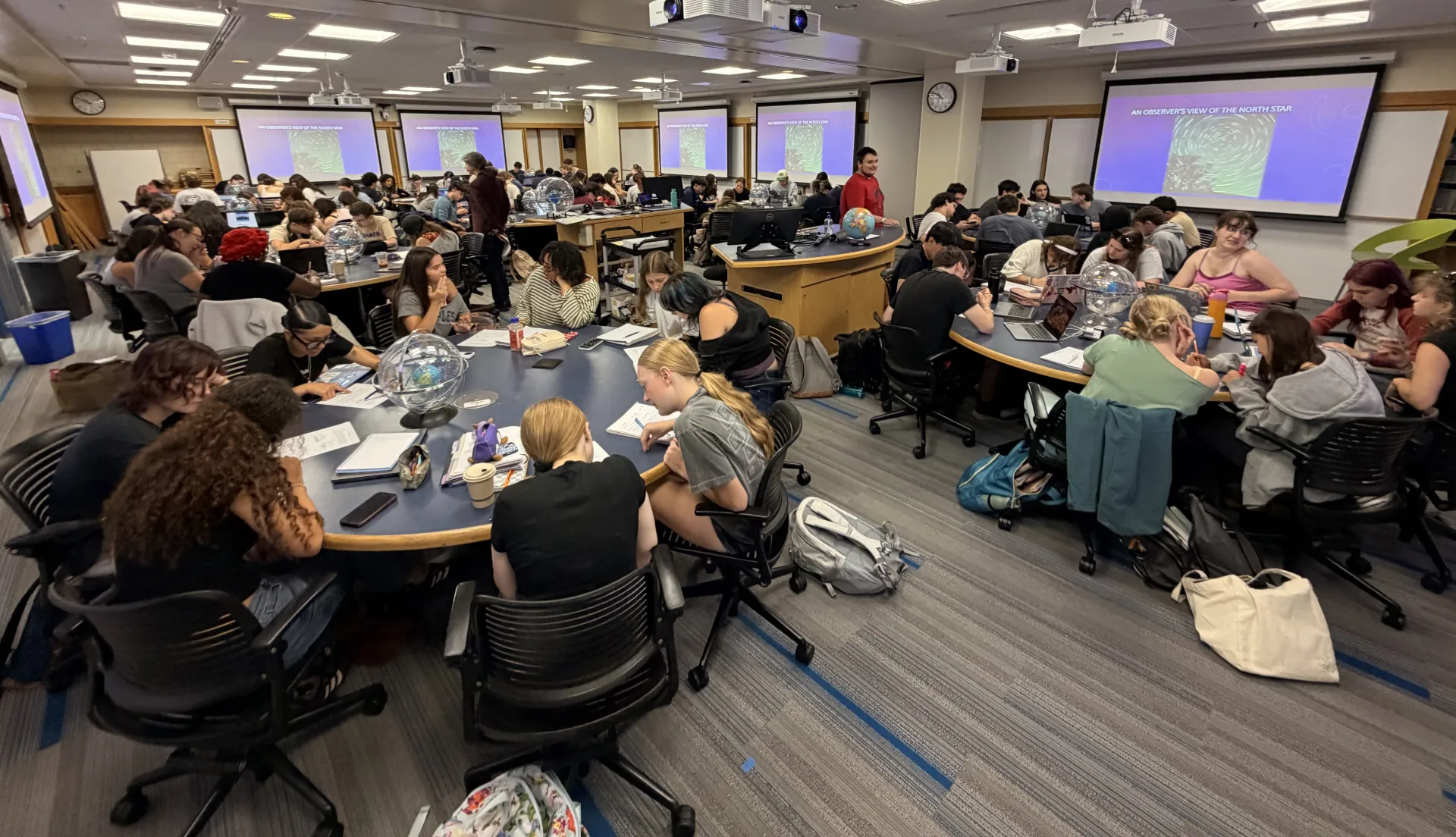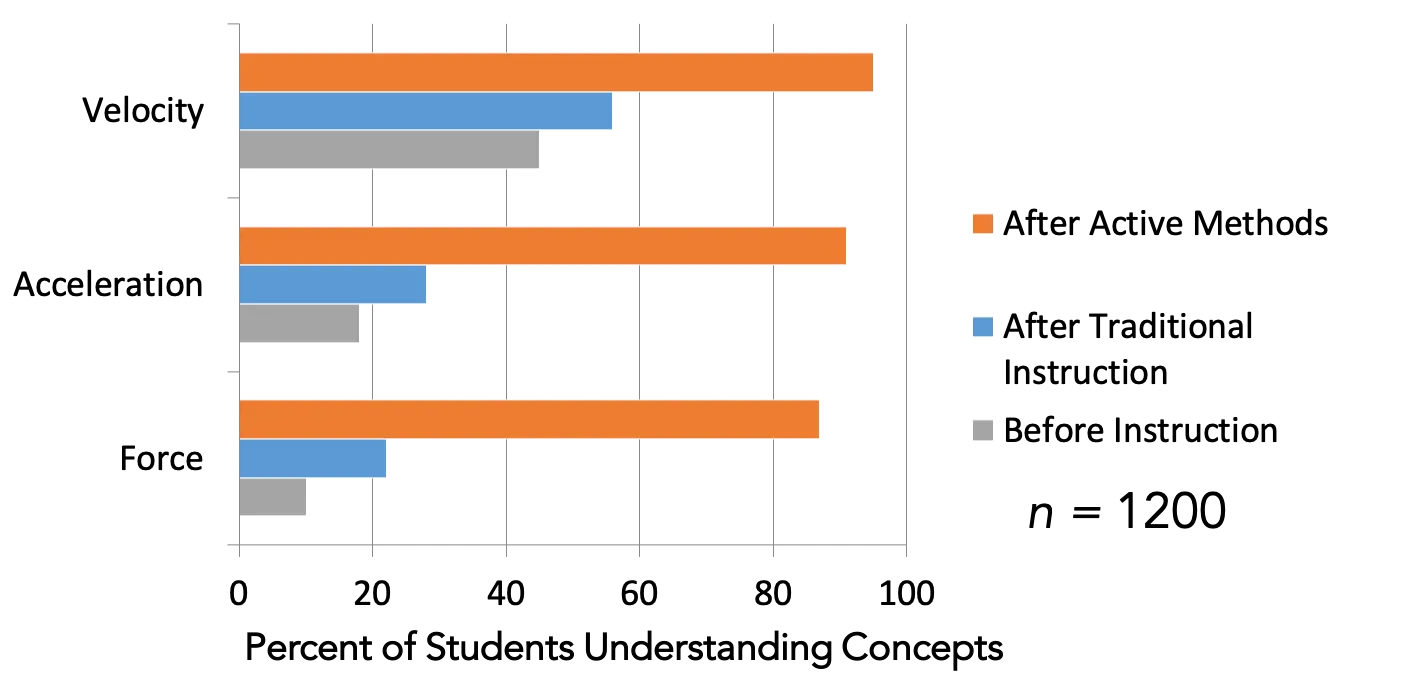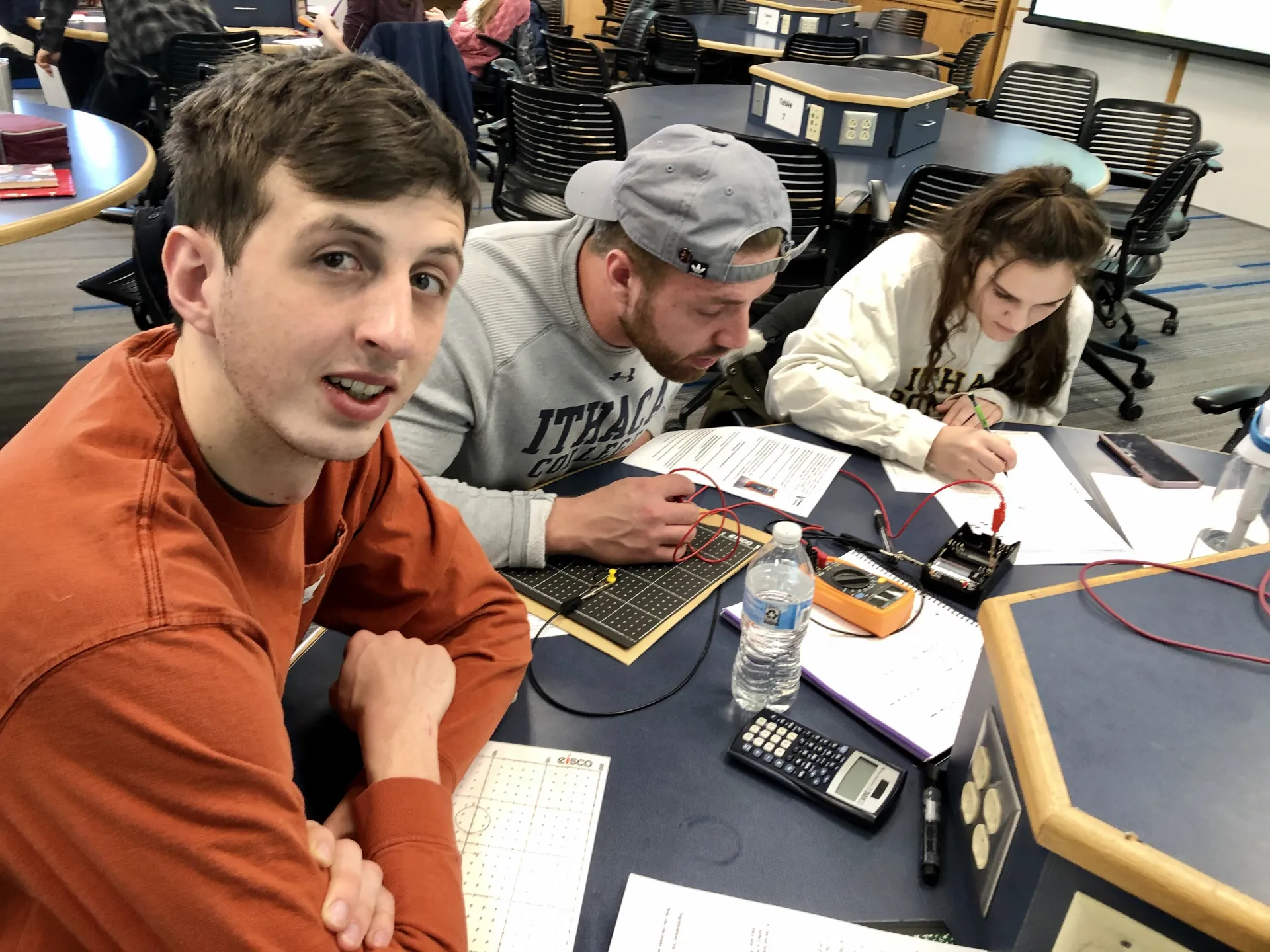
Physics education research has repeatedly proven the effectiveness of active learning environments, which centers on student-student interactions. The classrooms allow you to tackle tough problems with others in class so that you are more prepared to tackle similar problems on homework and tests.
The Ithaca College Department of Physics & Astronomy were early leaders in the design and creation of an active learning space that could serve our introductory physics classes. Our largest classroom and lab space, CNS 206/208, was developed in collaboration with Physics Education Researcher and active learning pioneer, Robert Beichner (North Carolina State University) beginning in 2005. In the years since, we have routinely updated our largest lab space it remains a state-of-the-art space for active learning and collaboration.
In 2024, the department significantly updated a neighboring lab space, CNS 204, to align that space with the active learning pedagogies so common in our department. The space was designed with direct feedback from students and faculty, and now hosts flexible seating arrangements, drop-down ceiling power, wall-mounted monitors, two projector screens, and whiteboards around the perimeter of the room.