Early engagement in inquiry-driven experiential learning

This award honors up to two exemplary first- or second-year students each year. The ideal recipient demonstrates early and enthusiastic engagement in inquiry-driven and experiential learning within physics or engineering.

This engagement may include (but is not limited to): participation in research or independent study or involvement in design, prototyping, or technical problem-solving projects. While still at an early stage in their academic career, the recipient shows initiative, curiosity, and a willingness to explore open-ended problems.

The ideal recipient has been involved in research over multiple semesters and has presented their work to internal and/or external audiences in formal or informal settings, and demonstrates an aptitude for continued involvement in research or technical innovation.

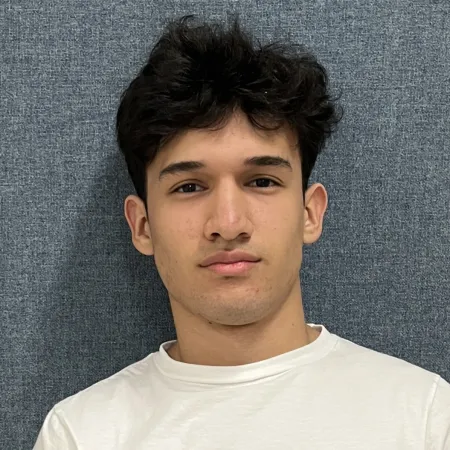
Maya Fanti '28

Maya Fanti '28, winner of the Emerging Investigator award

Maya Fanti ‘28 is pursuing a Bachelor of Science in Physics, with minors in Mathematics and Astronomy. Her academic interests center on observational astronomy and cosmology, with a particular focus on astronomical imaging and data analysis.

Maya studies aperture photometry under the mentorship of Professor Luke Keller, gaining hands-on experience with observational techniques and the analysis of astronomical data. Building on this work, she will continue her research this summer through a Research Experience for Undergraduates (REU) program in Cosmology at Cornell University in Summer 2026.

In addition to her research activities, Maya is dedicated to fostering a strong and supportive physics community on campus. Maya will serve on the board of the Society of Physics Students in 2026-2027, where she looks forward to supporting fellow students and encouraging engagement within the department and the broader scientific community.

Christopher Frazier '29

Chris Frazier '29, winner of the Emerging Investigator award

Chris has a passion for Quantum Information Science, which has has channeled into research into Superconducting QUantum Interference Device (SQUID) research.